OS
Olyver SturdivantOrthodontic Insurance Verification: Why It Costs You More Than You Think
Key Takeaways
- Manual insurance verification costs dental clinics $7-$8 per transaction, with each call taking 15-30 minutes; orthodontic verifications run longer due to benefit complexity
- Orthodontic benefits use lifetime maximums ($1,000-$3,000), not annual maximums — one-time verification errors have permanent financial consequences
- Insurance companies pay orthodontic claims in installments (monthly, quarterly, or at milestones), requiring ongoing tracking general dental never deals with
- Age cutoffs for orthodontic coverage vary by carrier: some stop at 18, others at 19 or 26 for dependents, and adult ortho coverage is not universal
- An estimated 90% of dental clinics report difficulty hiring administrative staff, making manual verification increasingly unsustainable
- Works-in-progress clauses can eliminate coverage entirely if a patient starts treatment before their ortho benefit activates or switches plans mid-treatment
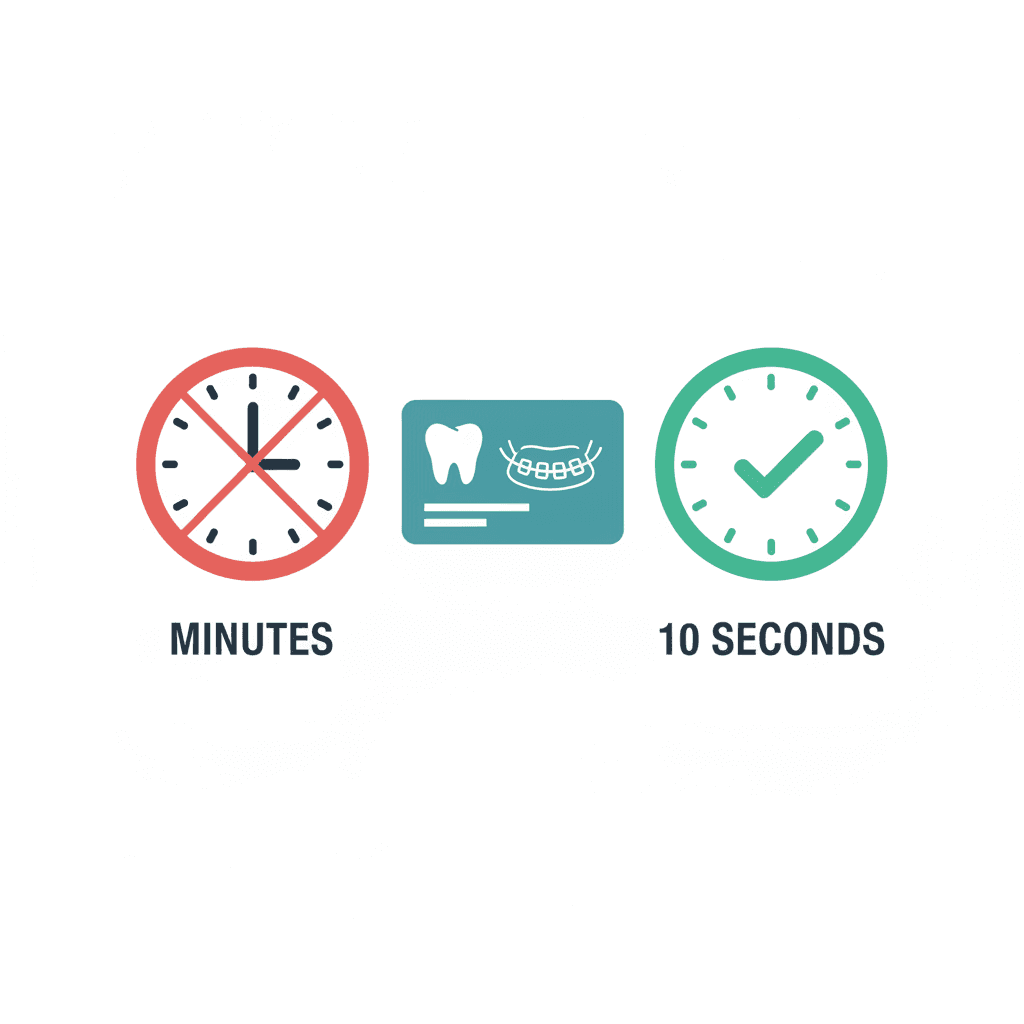
- Orthia verifies both dental and orthodontic eligibility and benefits in under 10 seconds, replacing the 15-30 minute manual process during the patient's first call
Every orthodontic clinic deals with insurance verification. But most treat it like a dental problem with dental solutions, and that is exactly where the bleeding starts.
Orthodontic insurance operates on fundamentally different rules than general dental coverage. Lifetime maximums instead of annual maximums. Lump-sum-plus-installment payment structures. Age eligibility cutoffs that vary by carrier. Waiting periods that can stretch to 12 months or longer. Dual coverage coordination that follows the birthday rule. Works-in-progress clauses that can zero out benefits entirely if a patient switches employers mid-treatment.
None of these exist in a standard dental verification workflow. And yet, most orthodontic clinics are either using dental verification tools, dental verification checklists, or dental-trained staff to handle a process that is categorically different. Even the major orthodontic PMS platforms like Cloud 9, Dolphin, and Ortho2 have significant gaps in how they handle insurance verification.
The result is hours of wasted staff time, inaccurate patient estimates, delayed treatment starts, and insurance revenue that quietly disappears because nobody caught a coverage detail that only matters in orthodontics.
Why Orthodontic Verification Is Not Dental Verification
When a general dental office verifies insurance, they are checking a relatively simple set of variables: Is the patient eligible? What is the annual maximum? What are the copays and coinsurance percentages for preventive, basic, and major services? Are there frequency limitations on cleanings or X-rays?
This information resets every benefit year. If you get it wrong, the financial exposure is limited to a single procedure. You can correct course on the next visit.
Orthodontic verification is structurally different in almost every way.
Lifetime Maximums vs. Annual Maximums
The most important distinction is that orthodontic benefits are almost always a one-time lifetime benefit. According to multiple insurance carriers including Delta Dental, the orthodontic maximum is a lifetime cap, typically ranging from $1,000 to $2,000 for most plans, with some employer-sponsored plans reaching $3,000.
This means if your treatment coordinator gets the benefit amount wrong, there is no "next year" to make up the difference. The error is permanent for the life of that patient's coverage. A $500 verification mistake on a dental cleaning is recoverable. A $500 verification mistake on a $5,500 comprehensive ortho case compounds across the entire treatment.
Installment Payment Structures
Unlike dental insurance, which typically pays a claim after the procedure is completed, orthodontic insurance pays over time. Most carriers make an initial lump-sum payment (usually 25 to 40% of the total benefit) when active treatment begins, then distribute the remaining benefit in installments.
These installment structures vary by carrier. Some pay monthly. Some pay quarterly. Some pay based on treatment milestones. Some require periodic progress claims to continue payments. Delta Dental specifically notes that if the total payable is $500 or less, they pay the full amount in one payment when the claim is processed.
Your team needs to know the specific payment structure for each patient's plan before the treatment coordinator presents financial options. If they assume quarterly payments but the carrier pays monthly, the patient's out-of-pocket projections will be wrong from day one.
Age Eligibility Complexity
General dental coverage applies to all ages uniformly for most services. Orthodontic coverage does not.
Many plans restrict orthodontic benefits to dependents under age 19. Some extend to age 26. Some exclude adult coverage entirely. Some offer reduced benefits for adults compared to adolescents.
This creates a verification requirement that does not exist in dental: you must confirm not just that orthodontic benefits exist, but that the specific patient qualifies based on their age and dependent status.
Works-in-Progress Clauses
This is the verification detail that costs orthodontic clinics the most money and is almost never discussed in dental verification training.
If a patient started orthodontic treatment under one insurance plan and then switches to a new plan mid-treatment, the new plan may or may not cover the remaining treatment. Many plans have explicit works-in-progress exclusions.
Your team must ask during verification: "Does this plan cover orthodontic works in progress?" If the answer is no, and the patient started treatment before their new coverage began, the clinic may receive zero insurance payment despite the patient having active orthodontic benefits.
Waiting Periods
Some orthodontic benefits include waiting periods of 6 to 12 months before coverage activates. A patient who just enrolled in a plan with orthodontic benefits may not be eligible to use them yet. If your team verifies that benefits exist but does not check the waiting period, you could start treatment and file a claim that gets denied.
The Real Cost of Manual Orthodontic Verification
The direct costs are measurable. According to industry data, manual insurance verification costs dental providers approximately $7 to $8 per transaction, with each verification taking an average of 13 to 25 minutes. For orthodontic verification, these numbers are conservative because of the additional data points involved.
Staff Time Allocation
Consider a clinic that sees 8 to 12 new patient consultations per week. Each new patient requires a full orthodontic benefits verification before the treatment coordinator can present financial options accurately. At 20 to 30 minutes per verification (accounting for hold times, portal lookups, and documenting the results), that is 3 to 6 hours per week of dedicated insurance work for new patients alone.
Add existing patients who change insurance mid-treatment, dual coverage coordination, and annual re-verifications. A busy orthodontic clinic can easily consume 10 to 15 hours per week on insurance verification tasks. At a blended cost of $22 to $28 per hour for an experienced coordinator, that is $11,000 to $21,000 per year in labor costs for a single function.
The Downstream Cost of Errors
The labor cost is the smaller problem. The larger cost comes from verification errors that cascade through the clinic.
When benefits are verified incorrectly: treatment coordinators present inaccurate financial arrangements. Patients sign contracts based on incorrect estimates. Claims get denied or reduced. The clinic must absorb the loss, renegotiate with the patient, or write off the difference. These errors directly impact your new patient conversion rate, which is likely already lower than you think.
The Staffing Problem
This labor-intensive process collides with healthcare staffing in 2026. The ADA Health Policy Institute has reported that nearly 90% of dental clinics find recruiting administrative staff extremely or moderately difficult. Training a new insurance coordinator on orthodontic billing nuances (CDT codes D8010 through D8090, lifetime maximums, installment tracking, pre-authorization workflows, dual coverage coordination) takes months. If that person leaves, the institutional knowledge walks out the door.
What an Orthodontic-Specific Verification Actually Requires
To illustrate the gap between dental and orthodontic verification, here is the minimum information needed before presenting financial options.
Eligibility Confirmation
Is the patient currently eligible? Is this primary or secondary insurance? What is the patient's dependent status and age? Is the patient eligible for orthodontic benefits specifically (separate from dental)?
Benefit Structure
What is the orthodontic lifetime maximum? What percentage does the plan pay (typically 50%, sometimes 60% or 80%)? Is the maximum per person or per family? Has any portion already been used? Are orthodontic benefits separate from or combined with the dental annual maximum?
Coverage Specifics
What age limits apply? Is adult orthodontic treatment covered? Does the plan cover all treatment types (metal braces, ceramic, clear aligners)? Are clear aligners covered at the same rate as traditional braces? Are records covered under orthodontic or diagnostic benefits? Does the plan cover retainers?
Payment and Filing Requirements
Is pre-authorization required? What is the initial payment percentage at banding? What is the installment frequency? Does the carrier require periodic progress claims? What CDT codes are required (D8080 for adolescent, D8090 for adult)?
Special Situations
Does the plan cover works in progress? Is there a waiting period? Are there exclusions for pre-existing conditions? How does dual coverage coordinate? If coverage terminates mid-treatment, what happens to remaining installments?
This is not a 5-minute phone call. This is a 20 to 30 minute investigation that requires asking the right questions in the right order.
How to Solve the Orthodontic Verification Problem
Better Templates and Training
At minimum, your verification process should use an ortho-specific template covering every data point above. General dental templates miss critical fields. Verify 3 to 5 business days before the consultation, not the day before.
Outsourcing
Outsourced services charge $6.50 to $8.25 per verification. However, most use general dental workflows and may not capture orthodontic-specific details like installment schedules, works-in-progress coverage, or dual coverage coordination.
Automated Eligibility and Benefits Verification
This is where the biggest time savings exist. Orthia runs real-time insurance eligibility and benefits verification for both general dental and orthodontic plans in under 10 seconds. When a new patient calls to schedule a consultation, Orthia can verify coverage during the conversation itself, pulling eligibility status, benefit details, and plan specifics before the patient hangs up.
This is not a basic eligibility check that tells you "patient has insurance: yes." Orthia returns actual benefit data including the information your treatment coordinator needs to prepare an accurate financial presentation. The verification happens during the intake call, which eliminates the separate verification step that currently consumes hours of staff time per week.
The difference between a 10-second automated verification and a 25-minute phone call is not incremental. It is structural. It means your treatment coordinator walks into every consultation with verified benefits already in hand. For clinics considering this approach, our guide to setting up an AI receptionist covers the implementation process step by step.
The Business Case
Consider a clinic with 40 new patient starts per month and an average insurance benefit of $1,500. If verification errors cause even a 5% loss rate on collectible insurance, that is $3,000 per month in preventable revenue loss, or $36,000 per year.
Add the $11,000 to $21,000 in annual labor costs for the verification process itself, and you are looking at $47,000 to $57,000 per year tied up in a single administrative function. For a clinic doing $2 million in annual production, that is nearly 3% of revenue.
The clinics that solve this problem create a measurable financial advantage. The ones that keep doing it the same way will keep absorbing costs they cannot see.
Sources: ADA Health Policy Institute staff recruitment surveys; Delta Dental orthodontic billing guidelines; Solutionreach insurance verification benchmarks; Medusind dental verification cost data; Zuub DSO verification labor analysis; CDT codes D8010-D8090 documentation; Veritias Dental Resources orthodontic billing guide.
Frequently Asked Questions
Dental verification checks annual maximums, copays, and coinsurance for preventive and restorative services — benefits that reset yearly. Orthodontic verification checks lifetime maximums, age eligibility cutoffs, installment payment schedules, pre-authorization requirements, works-in-progress coverage, and waiting periods. Orthodontic benefits are typically one-time use over the patient's lifetime.
A thorough orthodontic verification takes 20-30 minutes per patient, though hold times with certain carriers can push past 30 minutes. Industry data shows dental verification averages 13 minutes, but orthodontic verification requires additional questions about lifetime maximums, installments, age limits, and coverage specifics.
An orthodontic lifetime maximum is the total dollar amount a plan pays toward orthodontic treatment over the patient's lifetime. Common ranges are $1,000-$3,000. Unlike dental annual maximums that reset yearly, the orthodontic maximum is one-time. Once reached, the plan pays no additional orthodontic benefits regardless of future needs.
Yes. Orthia runs real-time eligibility and benefits verification for both general dental and orthodontic plans in under 10 seconds. This replaces the 15-30 minute manual phone call process. When a new patient calls, Orthia verifies coverage during the conversation so your TC has accurate information before the consultation.
Some carriers require pre-authorization before approving orthodontic benefits. Starting treatment without it from a carrier that requires it can result in complete claim denial — even if the patient has active orthodontic benefits. Pre-authorization involves submitting diagnostic records and a treatment plan for carrier review.
Outsourcing costs $6.50-$8.25 per verification but most services use general dental workflows and miss orthodontic-specific details like installment schedules and works-in-progress coverage. Automated verification through Orthia returns both dental and orthodontic data in seconds, eliminating both manual calls and outsourcing costs.
OS
Olyver Sturdivant
Contributing writer at Orthia AI.