OS
Olyver SturdivantYour Orthodontic New Patient Conversion Rate Is Probably Wrong
Key Takeaways
- Gaidge Analytics reports a 68% average conversion rate across U.S. orthodontic clinics — most owners think theirs is 80-90%
- Planet DDS 2025 data from 1,500 practices shows case acceptance averaging 64.4%
- The gap between a 65% and 85% conversion rate is roughly $396,000/year in a typical practice
- Conversion drops 20% the moment a patient walks out without committing, and decays 35-45% over two weeks
- Five funnel stages at 85% each produce only 44% end-to-end conversion — small improvements compound
- The two highest-leverage fixes: phone response speed (Stage 1) and financial presentation transparency (Stage 4)
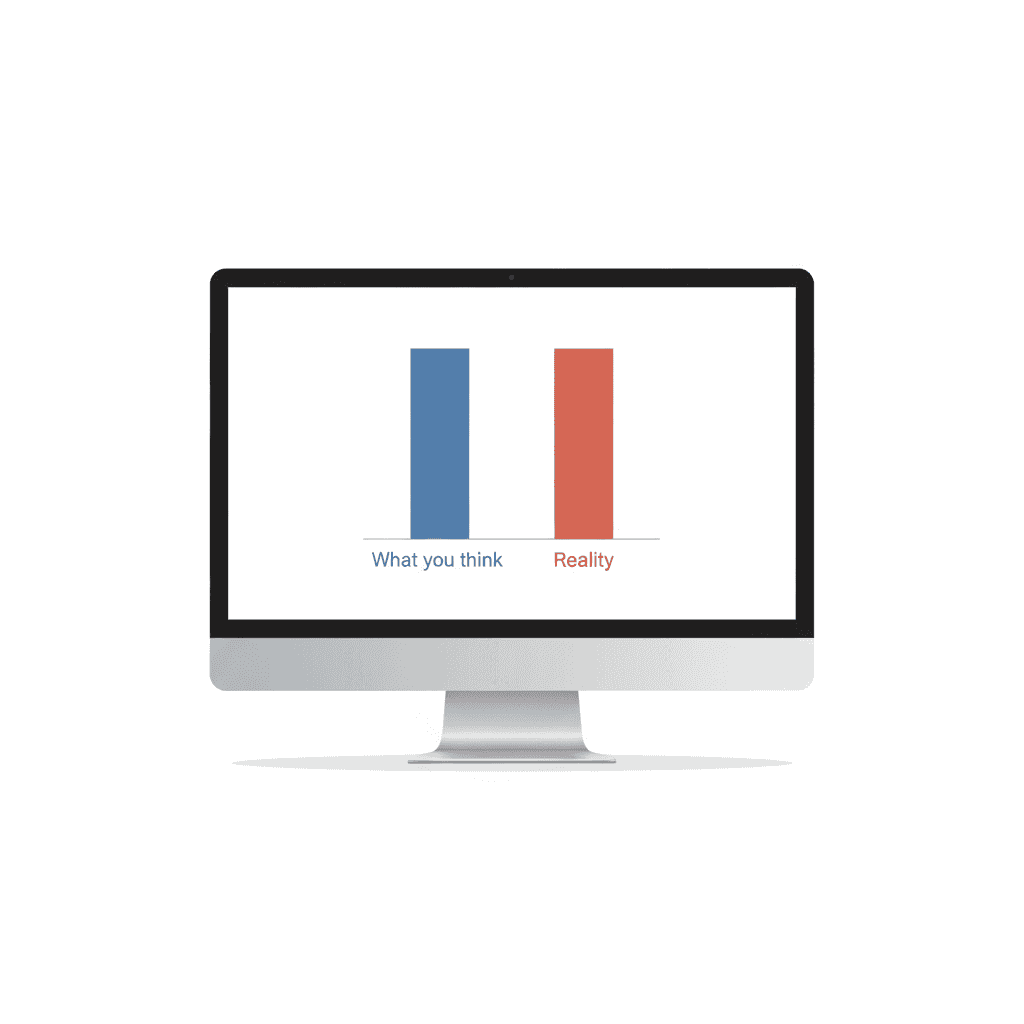
Most orthodontists think their conversion rate sits somewhere between 80 and 90 percent. It is one of the most repeated numbers in the industry. Ask any clinic owner how well they convert consultations into starts, and the answer almost always sounds confident.
The data tells a different story.
Gaidge Analytics, which tracks performance data across hundreds of U.S. orthodontic clinics, reported an average conversion rate of 68% in 2022. Planet DDS's 2025 Dental Industry Outlook, based on operational data from 1,500 orthodontic clinics, found case acceptance rates averaging 64.4%. That is a gap of 15 to 25 percentage points between what most owners believe and what the numbers actually show.
That gap has a price tag. In a clinic doing 30 new patient consults per month at an average case value of $5,500, the difference between a 65% conversion rate and an 85% conversion rate is roughly $396,000 per year in production. Not from more marketing. Not from more phone calls. Just from converting the patients who already walked through the door.
If you run an orthodontic clinic and you have not measured your true conversion rate recently, this post walks through how to do it, where the most common leakage points are, and what the top-performing clinics do differently.
What "Conversion Rate" Actually Means (and Why Most Practices Measure It Wrong)
The confusion starts with definition. There is no single industry-standard way to calculate an orthodontic conversion rate, and most clinics default to the version that makes them look best.
Here is the most common calculation: take the number of patients who started treatment, divide by the number who came in for a new patient exam, multiply by 100. If you examined 30 patients and started 24, you have an 80% conversion rate.
The problem is that this formula ignores everything that happened before the exam. It does not count the people who called but never scheduled. It does not count the people who scheduled but never showed up. It does not count the people who visited your website but never picked up the phone.
OrthoSynetics broke this down with a realistic example. Out of 100 patients referred by a general dentist, only about 30 will actually call your office. Of those 30, about 28 will schedule an appointment. Of those 28, about 23 will show up. Of those 23, maybe 16 are actually ready for treatment. And of those 16, about 13 will start.
That is 81% of treatment-ready patients, which is the number most orthodontists would report. But it is 13% of the original 100 patients who were referred. The real conversion rate depends entirely on where you start counting.
This is not an academic distinction. Each stage of this funnel represents a different operational problem with a different fix.
The Five Stages Where Orthodontic Clinics Lose Patients
Understanding your true conversion rate requires tracking each stage independently. Here is where the leakage happens and roughly how much each stage costs.
Stage 1: First contact to scheduled appointment. This is where the largest invisible losses occur. A patient or parent calls your office. If they reach voicemail, get put on hold for too long, or talk to someone who does not make scheduling easy, they move on — and every missed call costs $3,000 to $8,000 in case value. Industry data suggests patients contact up to five orthodontic clinics before choosing one. You are not losing to your clinical skills at this stage. You are losing to whoever answers the phone fastest and makes it easiest to book.
Stage 2: Scheduled appointment to kept appointment. The no-show rate for orthodontic consultations varies by practice, but Planet DDS data shows a 7.4% no-show rate across dental and orthodontic clinics. Some clinics report much higher rates, particularly for direct-to-consumer leads versus referral patients. Every no-show that is not rescheduled is a patient you already paid to acquire (through marketing or referral development) who never made it to the chair.
Stage 3: Exam to treatment recommendation. Not every patient who walks in needs treatment right now. Gaidge benchmarks suggest about 20% of new patient exams should move into a pre-treatment observation pool. This is not conversion loss. It is clinical judgment. The key is whether those observation patients are being tracked and followed up with systematically, or whether they are falling into a black hole in your practice management software.
Stage 4: Treatment recommendation to acceptance. This is where most clinics focus their attention, and for good reason. It is the stage where the treatment coordinator's skills, the financial presentation, and the patient experience converge. The gap between average practices (64-68% conversion at this stage) and top performers (80%+) often comes down to three factors: how well you listen before you present, how transparent the financial options are, and how quickly you can get a patient from "yes" to "scheduled for records."
Stage 5: Acceptance to actual treatment start. A patient says yes, but they need to check with their spouse, think about finances, or wait until the school year ends. This is the silent killer. OrthoFi data shows that conversion drops roughly 20% the moment a patient walks out the door without committing, and decays another 35-45% over the following two weeks. Every day between "I'll think about it" and a follow-up call is money evaporating.
How to Calculate Your Real Conversion Rate
Stop relying on your gut feeling. Pull the actual numbers for the last 90 days from your practice management system.
Count every new patient inquiry that came in by phone, web form, chat, or walk-in. This is your total lead volume. Then count how many of those inquiries resulted in a scheduled appointment. Then count how many of those scheduled appointments were actually kept. Then count how many of those exams resulted in a treatment recommendation. Then count how many accepted. Then count how many actually started treatment.
Divide each stage by the one before it. You now have a conversion rate for every step of your funnel, not one misleading aggregate number.
Here is what healthy benchmarks look like based on Gaidge data and industry reporting:
Inquiry to scheduled: 85%+. If you are below this, your phone handling or online scheduling is the bottleneck.
Scheduled to kept: 90%+. Below this, your confirmation and reminder system needs work, or there is too much time between scheduling and the appointment.
Exam to treatment recommended: This varies by clinical philosophy, but most clinics should be recommending treatment for 70-80% of new patient exams (the remainder going to observation).
Treatment recommended to accepted: 80%+ for top performers, 64-68% average. This is where TC training, financial presentation, and same-day start capability matter most.
Accepted to started: 90%+. If patients are saying yes but not showing up for records, your follow-up process is broken.
The math is unforgiving. If each stage runs at 85% (which sounds good), your end-to-end conversion from inquiry to treatment start is only 44%. Five stages at 85% each: 0.85 × 0.85 × 0.85 × 0.85 × 0.85 = 0.44. That is why the top-of-funnel stages matter so much. Small improvements at each stage compound.
What Top-Performing Practices Do Differently
The clinics that consistently convert above 80% (measured from exam to start) share a few patterns that have nothing to do with being better clinicians.
They respond fast. The single biggest predictor of whether an inquiry becomes a kept appointment is speed of response. When a parent calls at 11:30 AM on a Tuesday and gets a live answer within two rings, they schedule. When they hit voicemail, they call the next clinic on their list. This is not speculation. It is basic consumer behavior research applied to healthcare. Practices that answer 100% of calls, including after-hours and overflow calls, capture patients that competitors lose. Tools like Orthia exist specifically to solve this for orthodontic offices by handling every call instantly, 24/7, but the principle applies regardless of how you solve it: every inbound call needs a live response.
They make the financial conversation easy. Cost is the number one barrier to orthodontic case acceptance — and insurance verification that costs more than you think makes transparent financial presentations even harder. The clinics with the highest conversion rates do not avoid the money conversation. They make it transparent, flexible, and low-pressure. Digital payment presenters that let patients adjust down payments and monthly amounts on a screen in front of them consistently outperform paper treatment plans handed across a desk. Offering same-day starts with clear financing options removes the "I need to think about it" objection that kills conversion in Stage 5.
They follow up systematically. The average orthodontic clinic has a backlog of patients who were recommended treatment but never started. Most clinics have no structured system for following up with these patients. Top performers assign pending patients to a treatment coordinator who contacts them at specific intervals: 48 hours, one week, two weeks, and monthly after that. This is not pushy. It is patient care. Many patients genuinely intend to start but get distracted by life. A simple text or call reminder that you are holding a spot for them converts a surprising percentage of "maybe later" patients into starts.
They track the right metric. Gaidge and OrthoFi have both pushed the industry toward more reliable conversion metrics. OrthoFi's 45-Day Treatment Recommended Conversion (TRC) rate, which measures the percentage of patients recommended treatment in the last 45 days who converted, provides a tighter feedback loop than looking at monthly or quarterly aggregates. It is short enough to test whether operational changes (fee increases, TC staffing changes, new payment options) are working, without waiting months for noisy data to smooth out.
They own the observation pool. About 20% of new patient exams result in a recommendation for observation rather than immediate treatment. Gaidge benchmarks also show that 20% of annual starts should come from patients who were previously in observation. Practices that track and actively manage their observation pool treat it like a future revenue pipeline. Practices that do not are leaving significant production on the table every year.
The Compounding Math of Small Improvements
Orthodontic clinic owners tend to chase two types of growth: more new patients (marketing) or higher case values (fee increases). Both are valid. But neither is as efficient as improving conversion at each stage of the funnel.
Consider a clinic that does 40 consults per month at a $5,500 average case value with a 65% end-of-funnel conversion rate. That is 26 starts per month, or $143,000 in monthly production from new patient starts.
Moving that conversion rate from 65% to 75% means 30 starts per month instead of 26. That is an additional $264,000 per year in production from the exact same marketing spend, the exact same number of phone calls, and the exact same number of consult slots.
Now compare that to the cost of generating 4 additional consults per month through marketing to get those same 4 extra starts at a 65% conversion rate. At a typical cost per orthodontic lead of $150-300, you are spending $7,200-$14,400 per year on marketing to get results you could have gotten for free by tightening your funnel.
The point is not that marketing does not matter. It does. But spending more on marketing when your conversion funnel leaks at every stage is like pouring water into a bucket with holes in it. Fix the bucket first.
Where to Start
If you have not looked at your real conversion numbers before, start with just two data points: your inquiry-to-scheduled rate and your treatment-recommended-to-accepted rate. These are the two stages where the most production is typically lost, and they are relatively easy to pull from most practice management systems.
If your inquiry-to-scheduled rate is below 85%, the problem is almost certainly phone handling, response time, or scheduling friction. Audit how your phones are being answered. Call your own office as a mystery shopper. Check how many calls go to voicemail. These are solvable problems, often within a week — and a guide to the best AI phone answering options for orthodontic clinics can help you evaluate solutions.
If your treatment-recommended-to-accepted rate is below 70%, start by observing your TCs during consults. Are they listening before presenting? Are the financial options clear and flexible? Is there a same-day start pathway? These changes take longer but pay off permanently.
Track both numbers monthly. The clinics that measure conversion at each stage consistently outperform those that rely on a single aggregate number or, worse, a guess.
Your conversion rate is not just a number. It is the multiplier on everything else you do.
Sources: Gaidge Analytics, Planet DDS 2025 Dental Industry Outlook, OrthoSynetics, OrthoFi, AAO 2025 Economics of Orthodontics Survey, Sturgill Orthodontics.
Frequently Asked Questions
Top-performing clinics convert 80%+ of exams into treatment starts. The industry average is 64-68% based on data from Gaidge Analytics and Planet DDS. However, these numbers typically measure only the exam-to-start stage. When you include the full funnel from initial inquiry to treatment start, even top practices rarely exceed 50-60% end-to-end.
Pull 90 days of data from your PMS. Count total new patient inquiries (phone, web, chat, walk-in), then track how many scheduled, how many showed up, how many were recommended treatment, how many accepted, and how many started. Divide each stage by the previous one. This gives you a conversion rate per stage rather than one misleading aggregate number.
Most clinics measure conversion starting from the exam, which ignores patients lost before they ever walked in. Calls that went to voicemail, patients who scheduled but no-showed, and inquiries that were never followed up on are invisible in the typical calculation. The real number is almost always 15-25 percentage points lower than what clinic owners estimate.
Speed of response at the initial inquiry stage. Patients contact up to five practices before choosing one, and the clinic that answers first and makes scheduling easiest wins. After that, the second biggest loss point is the gap between treatment recommendation and acceptance, where unclear financial options and lack of follow-up cause patients to postpone indefinitely.
OrthoFi data shows conversion drops roughly 20% the moment a patient leaves the office without committing, and decays another 35-45% over two weeks. For initial inquiries, practices that answer 100% of calls instantly capture patients that competitors with voicemail systems lose permanently. 75% of patients who reach voicemail never call back.
The 45-Day Treatment Recommended Conversion rate measures the percentage of patients recommended treatment in the last 45 days who actually converted to a start. It provides a tighter feedback loop than monthly or quarterly conversion rates, allowing practices to quickly test whether operational changes like fee adjustments, TC staffing changes, or new payment options are working.
OS
Olyver Sturdivant
Contributing writer at Orthia AI.