OS
Olyver SturdivantHow Much Revenue Do Orthodontic Clinics Lose From Missed Calls?
Key Takeaways
- 30-35% of calls to orthodontic clinics go unanswered during business hours
- Each missed new patient call represents $3,000-$8,000 in lifetime orthodontic case value
- A single-location practice can lose $180,000-$480,000 annually from unanswered calls
- 85% of callers who reach voicemail hang up without leaving a message
- 75% of patients who miss a live answer never call back — they call a competitor
- Monday mornings see 40% higher call volume than average weekdays
- AI receptionists pay for themselves by capturing just one additional patient per month
The Real Scale of Unanswered Calls in Orthodontics
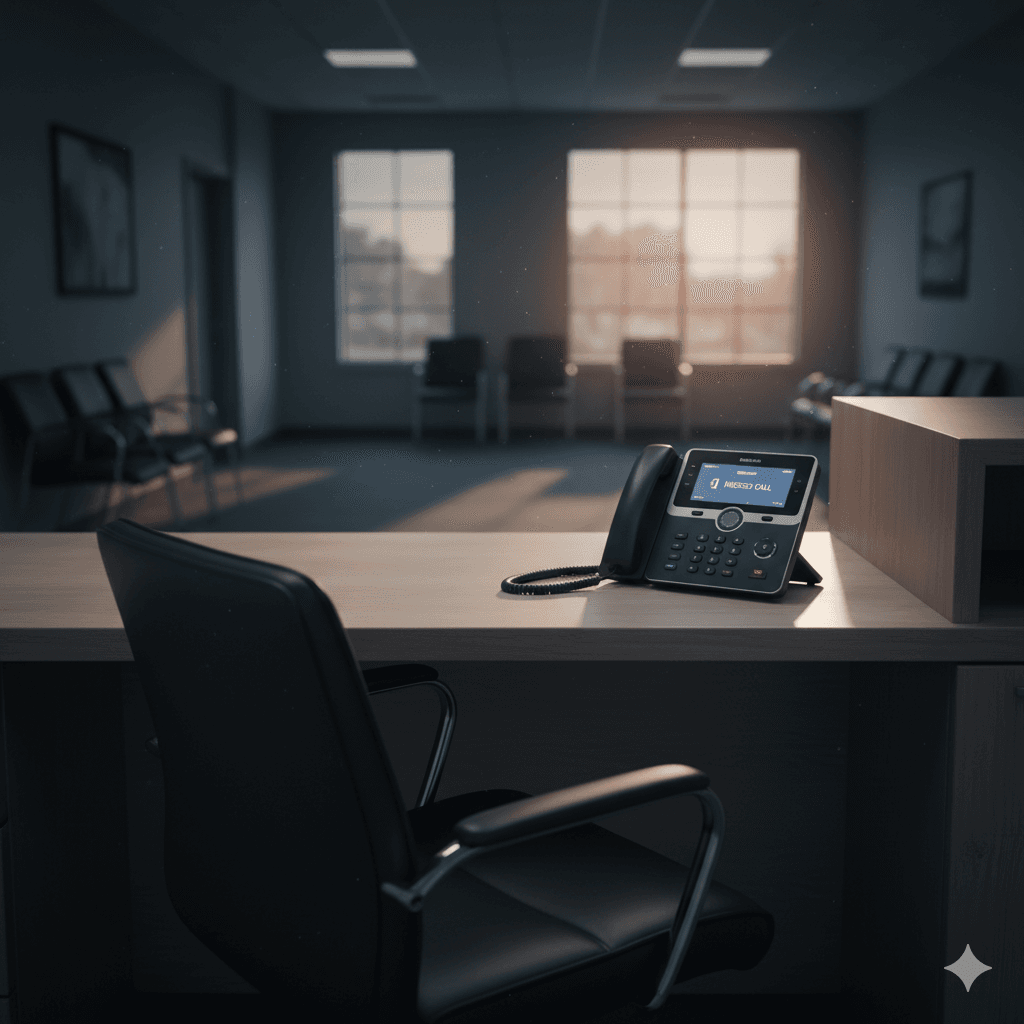
The average orthodontic clinic receives 50 to 150 inbound calls per day. Data from Weave Communications, CallRail, and Peerlogic consistently shows that 30 to 35 percent of those calls go unanswered during business hours. That is not a technology failure or a staffing problem unique to your office. It is structural — the job of answering every call while managing in-office patients has become impossible under current conditions.
For a clinic receiving 80 calls daily, a 30% missed rate means 24 unanswered calls every single day. Not all of those are new patients, but the ones that are represent the highest-value missed opportunity in your entire business.
The Revenue Math Behind Every Missed Call
Here is a realistic breakdown for a single-location orthodontic clinic. The numbers come from industry benchmarks, not best-case scenarios.
Daily missed calls: 80 calls/day x 30% missed rate = 24 missed calls per day
Monthly missed calls: 24 x 22 business days = 528 missed calls per month
Missed new patient inquiries: 528 x 2% new patient rate = approximately 10 potential new patients lost per month
Revenue impact at average case value: 10 patients x $5,500 average case value = $55,000 per month in potential lost revenue
Annual revenue leak: $55,000 x 12 = $660,000 in potential lost production per year
Even if you cut these numbers in half for conservatism, that is still $330,000 walking out the door annually. Most of it goes directly to the competitor who picked up the phone.
Why Orthodontic Clinics Miss More Calls Than They Realize
Most clinic owners underestimate their missed call rate because they only see the calls that come through. The calls that go to voicemail or get abandoned after 3 rings are invisible. You cannot manage what you do not measure.
The peak-hour problem
The highest-value calls cluster during the exact windows when your front desk is busiest. Peak call volume hits between 9 and 11 AM and again from 2 to 3 PM — precisely when your team is checking in patients, processing payments, and handling in-office questions. Monday mornings generate approximately 40% more call volume than an average weekday, as weekend inquiries stack up.
The lunch gap
Most orthodontic clinics either forward phones to voicemail during lunch or have one person covering while the rest of the team eats. That 60 to 90 minute window accounts for a disproportionate share of missed calls. Parents calling on their own lunch breaks — the exact demographic making orthodontic decisions — hit voicemail and never call back.
After-hours and weekend callers
Between 28% and 47% of patient calls come in outside standard business hours, depending on how broadly you define "after hours." Parents who work 9-to-5 jobs often cannot call during your office hours. Families discussing treatment options over the weekend want to schedule Monday morning — but your office is closed.
Staff turnover and training gaps
The DentalPost 2025 Salary Report found that nearly 30% of front office associates changed employers in 2024. Every time you lose a front desk team member, there is a 47-day average vacancy and then weeks of training. During those transition periods, your missed call rate spikes.
What Happens When a New Patient Call Goes Unanswered
DenteMax reports that only 14% of new patients will leave a voicemail. The other 86% hang up immediately. Industry data from multiple sources suggests that 75% of patients who miss a live answer will never call back — they call the next orthodontist on their list.
Unlike existing patients who have a relationship with your office, new patient callers have zero loyalty. They are comparison shopping, and your new patient conversion rate suffers with every unanswered ring. A parent researching braces for their teenager has already decided they need orthodontic treatment. They just need someone to pick up the phone and book the consultation. Every ring that goes unanswered pushes them toward a competitor.
This is especially acute in competitive metro areas. In cities like Austin, Dallas, Phoenix, and Atlanta where multiple orthodontic clinics serve overlapping areas, the clinic that answers first wins the patient. Geography does not protect you when Google shows five competitors within a 10-mile radius.
The Marketing ROI Destruction
Most clinic owners focus on generating more leads through marketing — Google Ads, social media, referral programs, community sponsorships. This makes sense. But consider the math:
If your clinic spends $5,000 per month on marketing and generates 100 new patient inquiries, but your front desk misses 30% of those calls, you are effectively wasting $1,500 of your marketing budget every month. That is $18,000 per year in marketing spend that generates a phone call no one answers.
The patient acquisition cost for orthodontic clinics runs $300 to $600 per patient according to Dentplicity's 2026 benchmarks. You are paying that cost whether the phone gets answered or not.
How AI Receptionists Solve the Missed Call Problem
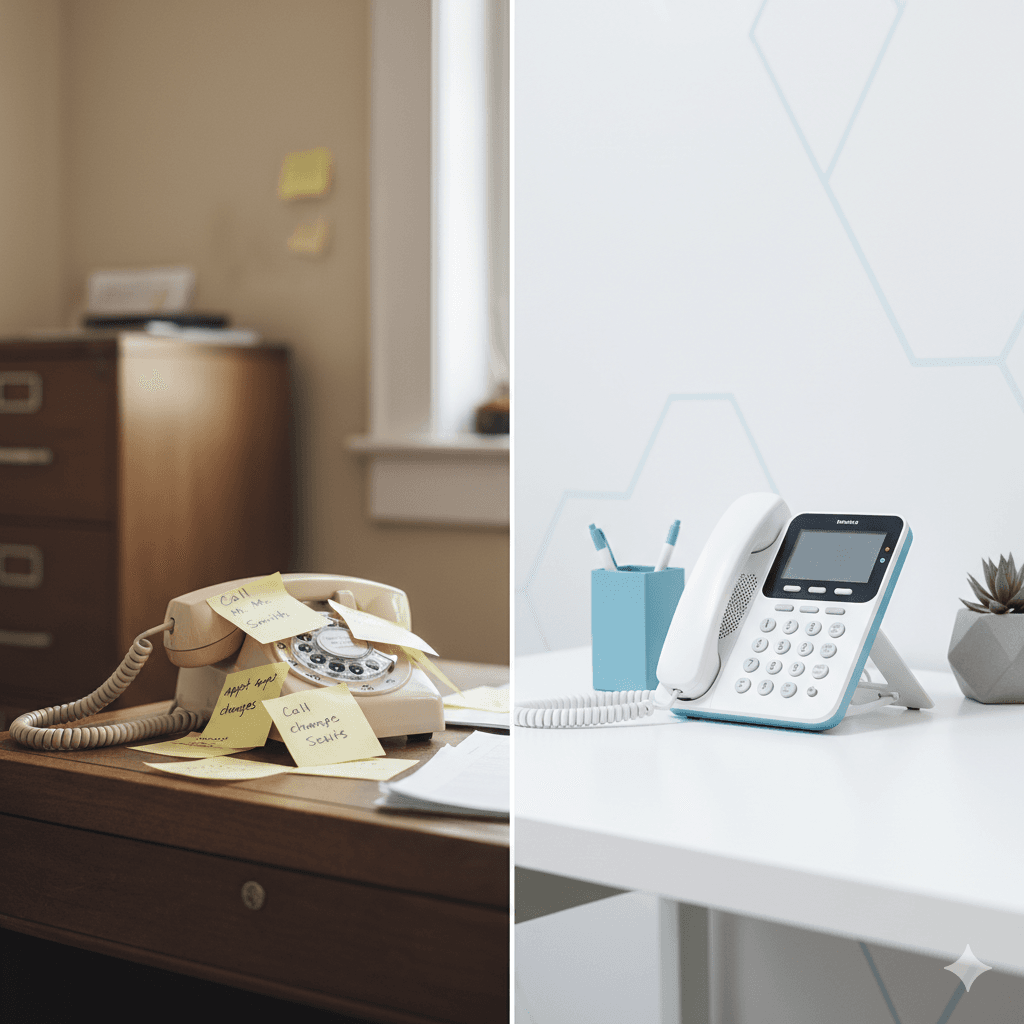
An AI receptionist like Orthia answers every inbound call instantly, 24 hours a day, 7 days a week. Zero hold time. Zero voicemail. Zero missed opportunities.
What makes this different from a generic answering service is depth of integration. Orthia connects directly to your practice management system — whether that is Cloud 9, Dolphin, Ortho2, Dentrix, or any of 68+ supported platforms — and books appointments in real time during the call. It verifies insurance eligibility, handles ortho-specific terminology, and routes emergencies to your staff by severity.
At a starting price of $399 per month, the ROI math is straightforward. If Orthia captures even one additional new patient per month at a $5,500 average case value, it pays for itself 13 times over. Most clinics are losing far more than one patient per month to missed calls.
How to Measure Your Own Missed Call Rate
Before you can fix the problem, you need to quantify it. Here is a simple self-audit framework:
- Pull your phone system's call log for the past 30 days
- Count total inbound calls, answered calls, and missed/voicemail calls
- Calculate your missed call rate (missed / total x 100)
- Identify your peak missed call windows by time of day
- Estimate how many of those missed calls were potential new patients (typically 1-3% of total call volume)
- Multiply missed new patient calls by your average case value
Most clinic owners who run this exercise for the first time are shocked by the numbers. As Beverly Wilburn, an AADOM member and clinic manager, described after pulling her own call reports: she found 29% of calls on a single day went straight to voicemail. She had no idea.
The Bottom Line
The average orthodontic clinic loses an estimated $180,000 to $480,000 annually from missed calls. The solution is not hiring more staff — that is expensive, limited to business hours, and subject to the same turnover challenges. The solution is technology that ensures every call gets answered, every lead gets captured, and every patient gets through to your clinic on the first try. If you are weighing your options, our comparison of AI receptionists versus traditional answering services for orthodontists breaks down the key differences.
The clinics that solve this problem first capture the patients that their competitors are losing. The ones that wait continue bleeding revenue they never knew they were missing.
Frequently Asked Questions
Data from Weave, CallRail, and Peerlogic shows 30-35% of calls go unanswered during business hours. For a clinic receiving 50-100 calls daily, that's 15-35 missed calls per day — concentrated during lunch, peak hours, and staff transitions.
Each missed new patient call represents $3,000-$8,000 in potential case revenue. With retainers, follow-ups, sibling referrals, and word-of-mouth, the downstream value of one patient relationship can exceed $10,000-$15,000 over several years.
DenteMax reports only 14% of new patients leave a voicemail. The other 86% hang up and call the next clinic. Parents calling about their child's orthodontic care are busy — they're calling during lunch breaks or after work and won't wait for callbacks.
AI receptionists like Orthia answer every call 24/7, book appointments directly into your PMS (Cloud 9, Dolphin, Ortho2, Dentrix), and handle insurance questions. Starting at $399/month, it pays for itself with one additional new patient captured.
Peak missed call windows are lunch hours (11:30am-1:30pm), Monday mornings (40% higher volume), after 5pm when parents call after work, and any time the front desk is occupied with in-office patients during the 9-11am and 2-3pm rushes.
If your clinic spends $5,000/month on Google Ads and SEO but misses 30% of resulting calls, you're wasting $1,500/month in marketing spend. You're paying to make the phone ring and then not answering it.
OS
Olyver Sturdivant
Contributing writer at Orthia AI.