OS
Olyver SturdivantCost Per Acquisition for Orthodontic Patients: Benchmarks, Math, and Where You Are Leaking Money
Key Takeaways
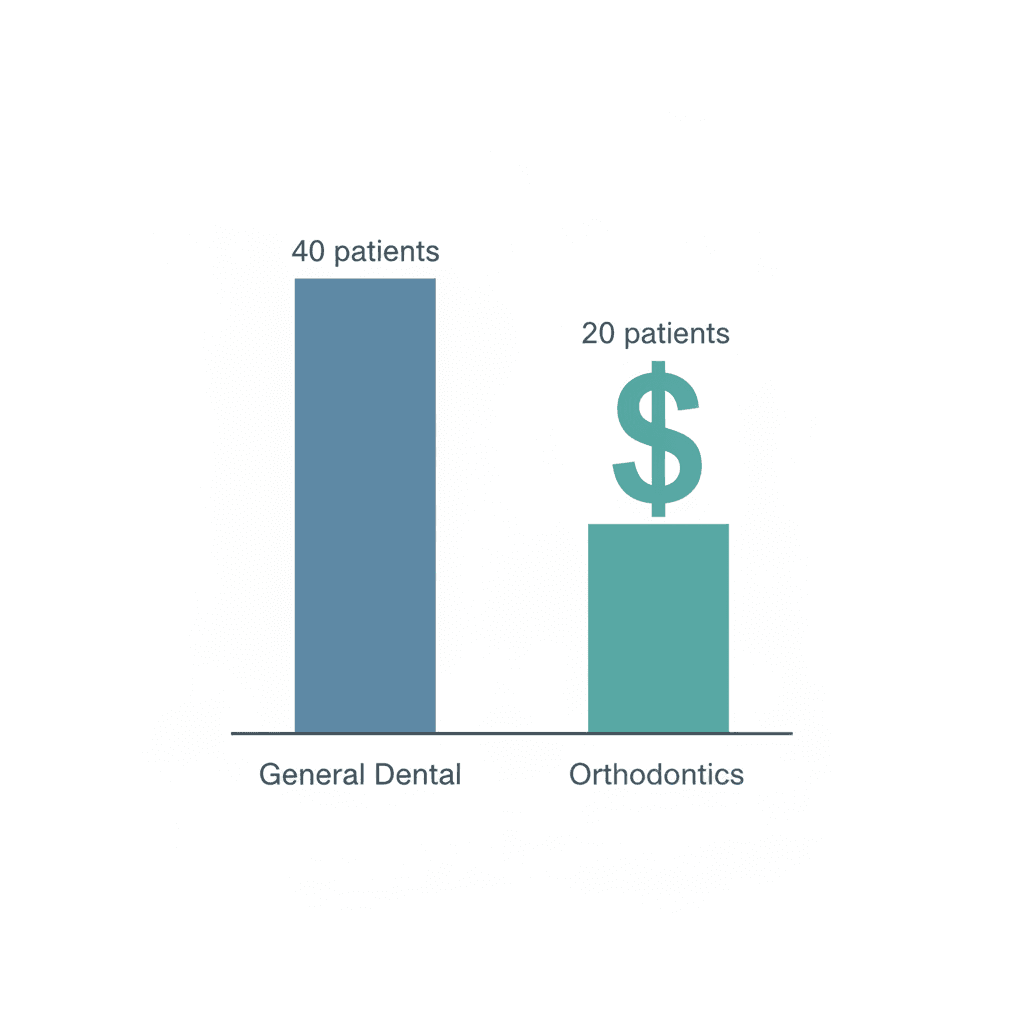
- The average orthodontic patient acquisition cost is $300 to $500 per new start, significantly higher than general dental ($150 to $250) because of longer lead cycles and higher-consideration treatment decisions
- Cost per lead is not the same as cost per acquisition: a $50 lead that never books a consultation costs you more than a $200 lead that starts treatment; track cost per start, not cost per click
- The most effective marketing mix (SEO + social media) brings in 20 to 40 new patients monthly at $300 to $500 per patient for orthodontic clinics, according to agency benchmark data
- Orthodontic patient lifetime value ranges from $5,000 to $12,000+ when including retreatments, retainers, whitening, and family referrals, making even a $500 acquisition cost highly profitable if you retain the patient
- The target LTV-to-CAC ratio is at least 3:1, meaning you should generate at least $3 in lifetime value for every $1 spent on acquisition
- 30 to 50% of orthodontic marketing spend is wasted between the ad and the appointment due to missed calls, slow follow-up, and poor phone conversion; fixing the operational funnel often delivers better ROI than increasing ad spend
- Orthia reduces effective acquisition cost by capturing calls that would otherwise go unanswered, verifying insurance in under 10 seconds, and booking appointments during the initial call instead of losing leads to callback delays
Most orthodontic clinics track their marketing spend. Fewer track their cost per lead. Almost none track their actual cost per acquisition: the total dollars required to generate one new patient who starts treatment.
This matters because the number that determines whether your marketing is profitable is not the cost per click, the cost per impression, or even the cost per lead. It is the cost per start. And the gap between cost per lead and cost per start is where most orthodontic clinics hemorrhage money without realizing it.
The Acquisition Cost Formula
Patient acquisition cost (CAC) is straightforward in concept:
Total Marketing Spend / Number of New Treatment Starts = Cost Per Acquisition
If you spend $5,000 per month on all marketing activities and generate 10 new treatment starts, your CAC is $500 per start.
But this simple formula hides important complexity. "Total Marketing Spend" should include everything: Google Ads, Facebook/Instagram ads, SEO retainer, website hosting, print materials, community sponsorships, referral incentives, and the staff time spent on marketing-related activities. Most clinics undercount by excluding staff labor and organic content creation time.
"Number of New Treatment Starts" should count patients who actually begin treatment, not patients who call, not patients who schedule consultations, and not patients who get examined but decline. Starts are the only number that generates revenue.
2026 Benchmarks: What Orthodontic Clinics Actually Pay
The available data on orthodontic-specific acquisition costs is thinner than for general dental, but several sources provide useful benchmarks.
Cost Per Lead vs. Cost Per Start
These are two different numbers, and conflating them is the most common mistake clinic owners make.
Cost per lead for orthodontic clinics varies dramatically by channel. Google Ads typically generates leads at $50 to $150 each. Facebook and Instagram ads range from $30 to $100 per lead. SEO-driven leads (organic website traffic) have no direct per-lead cost but require $1,500 to $5,000+ per month in ongoing SEO investment. Referrals have near-zero direct cost but are hard to scale.
Cost per start is always higher than cost per lead because not every lead converts. If your Google Ads generate leads at $75 each and your lead-to-start conversion rate is 25%, your actual cost per start from Google Ads is $300. If your conversion rate drops to 15%, the same $75 lead costs $500 per start.
This is why the operational funnel between the lead and the start matters as much as the marketing itself — and why your conversion rate is probably lower than you think.
Industry Benchmarks
For general dental clinics, patient acquisition costs typically range from $150 to $250 per new patient. For orthodontic and high-ticket dental services (implants, cosmetic dentistry), acquisition costs run $300 to $600+ per patient.
Agency benchmark data from practices using a combination of SEO and targeted social media content reports acquisition costs of $300 to $500 per new patient for orthodontic clinics, with this mix typically generating 20 to 40 new patients monthly.
These benchmarks assume a functional operational funnel. If your clinic misses calls, delays follow-up, or has a weak phone conversion process, your actual acquisition cost will be higher because you are paying for leads that never convert due to operational failures.
Where You Are Leaking Money
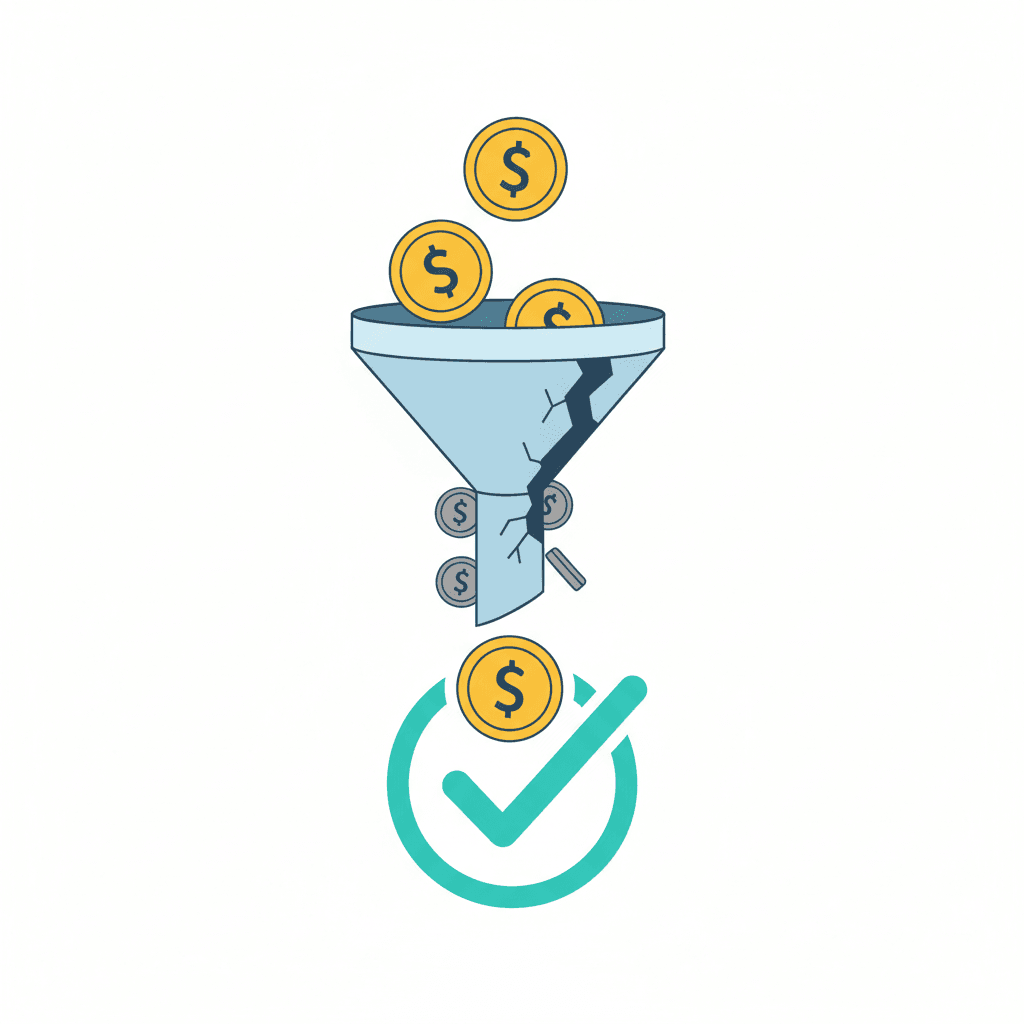
The acquisition funnel for an orthodontic patient has distinct stages, and each stage has a leakage point. Understanding where your funnel leaks is more valuable than increasing spend at the top.
Stage 1: The Ad Click (or Search Result)
A potential patient sees your ad or finds your website in search results. They click. You paid for this click ($3 to $15 for Google Ads, $1 to $5 for social ads).
Leakage at this stage is about targeting. If your ads reach people outside your geographic area, people who are not in the market for orthodontics, or people who cannot afford treatment, the click spend is wasted. This is a marketing problem, and most agencies handle it reasonably well.
Stage 2: The Website Visit
The potential patient lands on your website. They need to decide whether to take the next step: call, fill out a form, or use a chat widget.
Leakage here is about website conversion rate. The average dental landing page converts at 5 to 10% in a well-optimized campaign. If your website converts at less than 2%, simply improving the site's user experience, adding clear calls to action, and enabling online scheduling can cut your effective acquisition cost in half without increasing ad spend.
Stage 3: The Phone Call or Form Submission
The potential patient calls your office or submits a contact form. This is where they become a lead.
This is the highest-leakage stage in most orthodontic clinics. Industry data shows that orthodontic clinics miss a significant percentage of inbound calls during busy periods. Only 20 to 30% of callers who reach voicemail actually leave a message. The rest call another clinic.
Every missed call is a paid lead that you already spent money to generate. The revenue lost from missed calls in orthodontic clinics is staggering. If your Google Ads cost $75 per lead and you miss 30% of the calls those ads generate, you are effectively paying $107 per lead for the ones you actually answer. Your real cost per lead is 43% higher than you think.
This is where Orthia has the most direct impact on acquisition cost. By answering 100% of calls 24/7 and booking appointments during the call, Orthia eliminates the single largest source of lead leakage in the funnel. You already paid for the lead. Orthia makes sure it does not go to waste.
Stage 4: The Callback and Scheduling
If the patient reached your front desk, they might get scheduled immediately. If they submitted a form or left a voicemail, they enter the callback queue.
Lead response time data is clear: responding within 5 minutes increases conversion by up to 9 times compared to waiting 30 minutes. Most orthodontic offices respond to form submissions and voicemails within 4 to 6 hours. By then, the patient has often contacted another clinic.
AI systems that respond to form submissions and missed calls within seconds eliminate this delay entirely. The lead is converted before it has a chance to decay.
Stage 5: The Consultation
The patient arrives for their consultation. The treatment coordinator presents options and financial arrangements. The patient decides whether to start treatment.
Leakage at this stage is about consultation conversion rate, which averages 64 to 68% for orthodontic clinics according to industry data. Improving conversion at this stage requires better TC training, accurate financial presentations (which depend on correct insurance verification), and a smooth patient experience from arrival to case acceptance.
AI impacts this stage indirectly. When Orthia verifies insurance during the initial phone call, the treatment coordinator walks into the consultation with accurate benefit data already in hand. The financial presentation is prepared. There are no surprises. This preparation correlates with higher case acceptance rates.
Stage 6: The Treatment Start
The patient signs the contract and begins treatment. They are now a "start" and your acquisition cost is finalized.
Any leakage between consultation and start (patients who accept treatment but never show up for banding, patients who change their mind, patients who find a cheaper option) increases your effective acquisition cost. Automated follow-up communication between acceptance and banding reduces this drop-off.
How to Calculate Your Real Acquisition Cost
Most clinics calculate acquisition cost too simply. Here is the complete formula.
Step 1: Total All Marketing Costs
Add every dollar you spend on marketing in a given month. Google Ads spend. Facebook/Instagram spend. SEO agency retainer. Website hosting and maintenance. Print materials. Community event sponsorships. Referral incentive costs. Staff time spent on marketing tasks (estimate hours and multiply by hourly rate). Photography and video production. Any software used primarily for marketing.
Step 2: Count Starts, Not Leads
Count only patients who began treatment in that month. Not calls received. Not consultations booked. Not cases accepted. Starts. This is the only number that generates revenue.
Step 3: Calculate by Channel
If possible, break down both spend and starts by channel. This tells you which channels produce starts most efficiently and which ones produce leads that never convert.
For example: you might discover that Google Ads generates leads at $75 each with a 20% start rate ($375 per start), while patient referrals generate leads at near-zero cost with a 60% start rate. This data tells you that improving your referral process might deliver better ROI than increasing ad spend.
Step 4: Compare to Lifetime Value
Your acquisition cost only matters relative to the value that patient generates over their lifetime relationship with your clinic.
Orthodontic patient lifetime value (LTV) ranges from $5,000 to $12,000+. A comprehensive treatment case is worth $5,000 to $8,000. Add retainer replacements, whitening, clear aligner refinement, and sibling/family referrals, and the lifetime value for many patients exceeds $10,000.
The target ratio is at least 3:1 (LTV to CAC). If your LTV is $8,000 and your CAC is $400, your ratio is 20:1. That is excellent. If your LTV is $5,000 and your CAC is $2,000, your ratio is 2.5:1. That is borderline.
The Cheapest Way to Lower Your Acquisition Cost
Most clinics try to lower acquisition cost by negotiating cheaper ad rates, switching agencies, or cutting marketing spend. These approaches have diminishing returns.
The cheapest way to lower your acquisition cost is to convert more of the leads you are already generating.
Fix the Phone
If you are missing 20 to 30% of inbound calls and only 20 to 30% of those callers leave voicemail, you are losing roughly 14 to 21% of all leads before anyone on your team even knows they existed. Fixing this one problem reduces your effective cost per start by a corresponding percentage.
Orthia fixes this by answering 100% of calls 24/7. Every lead that reaches your phone number reaches Orthia. Every lead that reaches Orthia has the opportunity to become a booked appointment. The marketing spend that generated that lead is no longer wasted.
Speed Up Response Time
If your average response time to form submissions and voicemails is 4 to 6 hours, you are losing leads to competitors who respond faster. Reducing response time to under 5 minutes can increase conversion by up to 9 times.
Orthia responds to every call in real time. There is no response delay because the scheduling happens during the conversation.
Verify Insurance During the Call
When a patient calls and asks "do you take my insurance?" and your front desk says "let me take down your information and we will call you back," you have just introduced friction into the conversion process. As we cover in our breakdown of why orthodontic insurance verification costs more than you think, this delay is one of the most common conversion killers. Some percentage of those patients will not answer the callback. Some will call another clinic that answers the question immediately.
Orthia verifies dental and orthodontic insurance in under 10 seconds during the call. The patient gets a real answer. The friction is eliminated. The lead converts.
Prepare Your TC With Better Data
If your treatment coordinator walks into consultations without verified insurance data, the financial presentation is incomplete. Incomplete presentations lead to "we need to think about it" responses, which is code for "we are going to call another clinic that had their numbers ready."
When Orthia verifies insurance during the initial call, your TC has benefit data before the patient arrives. The financial presentation is accurate and prepared. Case acceptance improves. Cost per start decreases because more consultations convert.
Sources: Dentplicity 2026 dental patient acquisition cost benchmarks; First Page Sage average patient acquisition cost report (2021-2025 data); Dr. Marketing patient acquisition cost analysis; Incept Health dental CPA benchmarks (Dataman Group and RevUp Dental data); HIP Creative orthodontic marketing ROI guide; Direction.com orthodontic marketing cost and ROI data; Zevi Digital dental acquisition cost benchmarks; ClawAnalytics dental CPA tracking guide; lead response time conversion data from industry studies.
Frequently Asked Questions
The average orthodontic patient acquisition cost ranges from $300 to $500 per new treatment start. This is higher than general dental ($150 to $250) because orthodontic decisions involve longer consideration cycles, higher treatment costs, and more complex family decision-making. The actual cost varies significantly by market competitiveness, marketing channels used, and the clinic's operational efficiency at converting leads to starts.
Cost per lead measures how much you spend to generate one inquiry (phone call, form submission, chat message). Cost per acquisition measures how much you spend to generate one patient who actually starts treatment. Because only a fraction of leads convert to starts, cost per acquisition is always higher than cost per lead. For orthodontic clinics, a $75 lead with a 20% conversion rate produces a $375 cost per acquisition. Tracking cost per start rather than cost per lead gives you the true picture of marketing profitability.
The target is at least 3:1, meaning you generate at least $3 in patient lifetime value for every $1 spent on acquisition. With orthodontic treatment values of $5,000 to $8,000 and lifetime values potentially exceeding $12,000 (including retainers, refinements, and family referrals), most clinics can achieve ratios of 10:1 or higher if their operational funnel is efficient. A ratio below 3:1 indicates either excessive marketing spend or poor lead conversion.
Every missed call represents a marketing lead you already paid to generate. If you miss 20% of inbound calls and your cost per lead is $75, you effectively paid $93.75 per lead for the ones you actually answered. Your cost per start increases proportionally. Orthia eliminates this leakage by answering 100% of calls 24/7 and booking appointments during the call, which means every lead you paid to generate has the maximum chance of converting.
Patient referrals have the lowest direct acquisition cost (near zero) with the highest conversion rate (typically 50 to 60% start rate). SEO has the lowest acquisition cost among paid channels over time, though it requires 4 to 6 months of investment before results compound. Google Ads delivers the most predictable lead volume but at higher per-lead costs. The most effective approach according to benchmark data is SEO combined with targeted social media content, producing 20 to 40 new patients monthly at $300 to $500 per start.
The most effective approach is improving conversion at each stage of the funnel rather than generating more leads. Answer every phone call (Orthia handles this 24/7). Respond to form submissions within minutes, not hours. Verify insurance during the initial call so patients get immediate answers. Prepare treatment coordinators with verified benefit data before consultations. Reduce no-shows with automated reminders. Each improvement converts a higher percentage of existing leads into starts, lowering your effective cost per acquisition without any additional ad spend.
OS
Olyver Sturdivant
Contributing writer at Orthia AI.