OS
Olyver SturdivantCloud 9 vs Dolphin vs Ortho2: What Your Orthodontic PMS Can and Cannot Do in 2026

Key Takeaways
- Cloud 9 is the only fully cloud-native option — no local server required; Ortho2 Edge Cloud offers cloud hosting; Dolphin is historically locally-installed with cloud capabilities
- Dolphin's imaging and cephalometric analysis tools are the strongest of the three, with 2D/3D imaging, treatment simulation, and ceph tracing best-in-class
- Ortho2 Edge Cloud positions itself as the most all-in-one solution, bundling imaging, patient communication, online scheduling, and rewards without third-party add-ons
- Cloud 9 has been acquired by Planet DDS, raising user concerns about add-on pricing and reduced human support access
- All three support multi-location clinics, but Cloud 9 and Ortho2 have stronger multi-site management for OSOs and DSOs
- None of the three solve the core front desk problem: answering calls 24/7, verifying insurance in real time, and converting inquiries into appointments
- Orthia integrates with all three PMS platforms to handle the phone-to-appointment workflow that practice management software was never built to manage
If you are reading this, you are probably doing one of two things: evaluating a new practice management system for your orthodontic office, or wondering whether your current one is holding you back.
Most of the comparison content that exists for orthodontic PMS platforms is vendor-produced. Cloud 9 writes about why Cloud 9 is the best. Dolphin publishes case studies about Dolphin customers. Ortho2 highlights Ortho2 testimonials. Nobody is writing the honest version: what each system actually does well, where each falls short, and what none of them solve.
This is that post. No affiliate links. No sponsorship. Just a breakdown of the three dominant orthodontic clinic management platforms in 2026.
Understanding the Three Platforms
Before comparing features, it helps to understand where each platform comes from. History matters because it shapes the product's architecture, its strengths, and the kinds of clinics it serves best.
Cloud 9: The Cloud-Native Contender
Cloud 9 is a browser-based practice management system built specifically for orthodontics, pediatric dentistry, group practices, and dental service organizations. It is currently deployed across more than 2,300 locations with approximately 28,000 users across North America.
Cloud 9 was acquired by Planet DDS, which also owns Denticon and other dental software products. This acquisition has expanded Cloud 9's resources and integrations but has also introduced some friction. Multiple user reviews on Capterra and Software Advice mention frustration with add-on pricing for features that arrived after the acquisition, and difficulty reaching human support for billing issues.
Cloud 9's core advantage is its architecture. Because it was built cloud-native, there are no local servers, no software installations, and no IT infrastructure to maintain. You log in from a browser on any device with internet access. For clinics with multiple locations or staff who need remote access, this is a meaningful operational benefit.
Dolphin Management: The Imaging Powerhouse
Dolphin Imaging and Management Solutions has been in the orthodontic software business since 1988. It is distributed through Patterson Dental and has a particularly strong presence in academic orthodontic programs, where it is used in most orthodontic residency programs in North America.
Dolphin is primarily known for its imaging capabilities. The platform started as an imaging and cephalometric analysis tool and expanded into practice management. This origin shows in the product: Dolphin's imaging, ceph tracing, 3D rendering, and treatment simulation tools are widely considered the best in the orthodontic software market.
The practice management side (Dolphin Management) is a full-featured system that handles scheduling, patient records, billing, and claims. It runs on Microsoft's .NET framework and SQL Server, which makes it robust and scalable, but also one that historically required local server infrastructure. Dolphin now offers cloud hosting options, but the product's DNA is still that of a locally-installed application.
User reviews are polarized. Loyal users describe it as the most comprehensive orthodontic software available. Critical users cite poor customer support, slow response times, and stability issues after updates.
Ortho2 Edge Cloud: The All-in-One Veteran
Ortho2 has been focused exclusively on orthodontic software for more than 40 years, making it the longest-tenured platform in this comparison. Edge Cloud is their current cloud-based offering, and it serves practices of all sizes, from single-location startups to networks with over 100 workstations across multiple offices.
Ortho2's positioning is "all-in-one." Edge Cloud bundles practice management, imaging, patient communication, online scheduling, digital forms, virtual appointments, patient reward programs, and animations into a single subscription. The pitch is that you do not need third-party integrations for core functions because everything is already included.
The company is trusted by approximately 25,000 users across 3,000 locations in 10 countries. They are distributed through Henry Schein One. User reviews tend to be positive, with particular praise for customer support quality and orthodontic-specific feature depth.
Feature-by-Feature Comparison
Scheduling and Appointment Management
Cloud 9 provides a drag-and-drop scheduling interface with multi-provider, multi-location calendar views. It supports automated appointment reminders via text and email, and includes a Patient Spotlight tool that gives orthodontists quick access to patient status and treatment information at a glance.
Dolphin Management handles scheduling with a similar multi-provider interface. One standout is its GPS-style patient tracking within the office, which shows where patients are in the clinical flow (waiting room, X-ray, chair). For high-volume practices, this operational visibility is valuable.
Ortho2 Edge Cloud offers scheduling with integrated online booking. Patients can book exam appointments directly from a link placed on the clinic website, social media, or shared with referring dentists. The system includes automated reminders and dashboard visibility into daily schedules and new patient flow.
Verdict: All three are competent for scheduling. Ortho2 has a slight edge for clinics that want built-in online scheduling without a third-party tool. Cloud 9's browser-based access makes remote schedule management the simplest. Dolphin's in-office patient flow tracking is most useful for high-volume clinical operations.
Imaging and Diagnostics
This is where the three platforms diverge most significantly.
Dolphin dominates this category. Its imaging suite includes 2D and 3D cephalometric tracing, treatment simulation (showing patients what their profile could look like post-treatment), 3D CBCT rendering with patent-pending nerve canal isolation, and Aquarium patient education animations. Most orthodontic residency programs train on Dolphin's imaging tools, which means many orthodontists enter practice already familiar with the platform.
Ortho2 Edge Cloud includes imaging capabilities within the platform. Edge Animations provide patient education content, and the system supports digital image capture, storage, and management. Its imaging analysis tools are not as deep as Dolphin's ceph tracing and 3D simulation capabilities, but they avoid the two-system problem.
Cloud 9 integrates with external imaging systems, including Dolphin, but does not have comparable built-in imaging analysis tools. Practices using Cloud 9 for management often pair it with Dolphin for imaging.
Verdict: If clinical imaging and diagnostic analysis are primary considerations, Dolphin is the clear leader. Ortho2 offers a solid integrated option. Cloud 9 requires a third-party imaging solution.
Billing and Insurance Management
Orthodontic billing has unique requirements: installment tracking, lifetime maximum management, CDT codes D8010-D8090, and pre-authorization workflows.
Cloud 9 provides claim processing, auto-pay capabilities, and CDT code management. Users report that basic billing functions work well, though some find reporting limited for complex financial analysis.
Dolphin Management handles orthodontic billing with a system designed for installments. It includes proposal and fee quote tools that allow treatment coordinators to present multiple payment options.
Ortho2 Edge Cloud includes a billing system with a feature that lets responsible parties select from predetermined treatment options and adjust payment terms online. This self-service approach to financial arrangements is relatively unique and can reduce treatment coordinator phone time.
Verdict: All three handle orthodontic billing adequately. Ortho2's self-service financial arrangement feature is a standout. Note that none of these platforms verify insurance eligibility and benefits in real time during a patient call. That requires a separate tool or integration.
Patient Communication
Cloud 9 offers automated text and email reminders, links to digital forms and patient portals, and marketing campaign tools. Some features may require additional subscription fees.
Dolphin Management includes the MyOrthodontist app for patient engagement and the AnywhereDolphin feature for sharing records. Dolphin's communication tools have been criticized for being behind paperless healthcare trends.
Ortho2 Edge Cloud bundles comprehensive communication tools including automated reminders, birthday messages, event invitations, marketing campaigns, online forms, virtual appointment capabilities, and a gamified patient reward program for treatment compliance.
Verdict: Ortho2 offers the most comprehensive built-in communication suite without add-on costs. Cloud 9 is competitive but some features carry extra fees. Dolphin's communication tools represent the weakest area of the platform.
Multi-Location and DSO Support
Cloud 9 was designed with multi-location clinics in mind. Its cloud-native architecture means all locations access the same data in real time with centralized reporting.
Ortho2 Edge Cloud supports multi-location clinics with centralized data and cross-location scheduling. The platform scales from single-notebook startups to networks with 100+ workstations.
Dolphin Management supports multi-location clinics with its SQL Server backend providing robust data handling. Multi-location deployments have traditionally required more IT infrastructure than cloud alternatives.
Verdict: Cloud 9 and Ortho2 are the strongest for multi-location clinics. Cloud 9's cloud-native architecture gives it an edge for zero-infrastructure organizations.
What None of Them Solve
Here is where an honest comparison needs to go beyond the feature checklist.
All three platforms are designed to manage what happens after a patient is already in your system. They handle scheduling, charting, billing, imaging, and communication for patients who have already called, already scheduled, and already started treatment.
None of them solve the upstream problem: what happens when the phone rings.
The Phone Gap
When a new patient calls your office, none of these platforms answer the phone. None of them convert a phone inquiry into a booked appointment. None of them handle the call when your front desk is with another patient, at lunch, or after 5 PM.
The PMS assumes the appointment is already on the calendar. But someone has to get it there. That "someone" is your front desk staff, and they can only answer one call at a time during business hours.
Each missed new patient call represents $3,000 to $8,000 in potential treatment revenue. The revenue orthodontic clinics lose from missed calls adds up fast — a clinic that misses even 2 to 3 new patient calls per week is looking at hundreds of thousands in annual lost revenue potential.
The Insurance Gap
When that new patient calls and asks "do you take my insurance?", none of these platforms can answer in real time. Manual orthodontic insurance verification takes far longer than it should — 15 to 30 minutes per patient — and usually happens hours or days after the initial call.
The After-Hours Gap
When a patient calls at 6 PM on a Tuesday or 10 AM on a Saturday, all three platforms are technically accessible. But there is nobody logged in to answer the phone and book the appointment. Between 28% and 47% of patient calls come outside standard business hours.
Where Orthia Fits
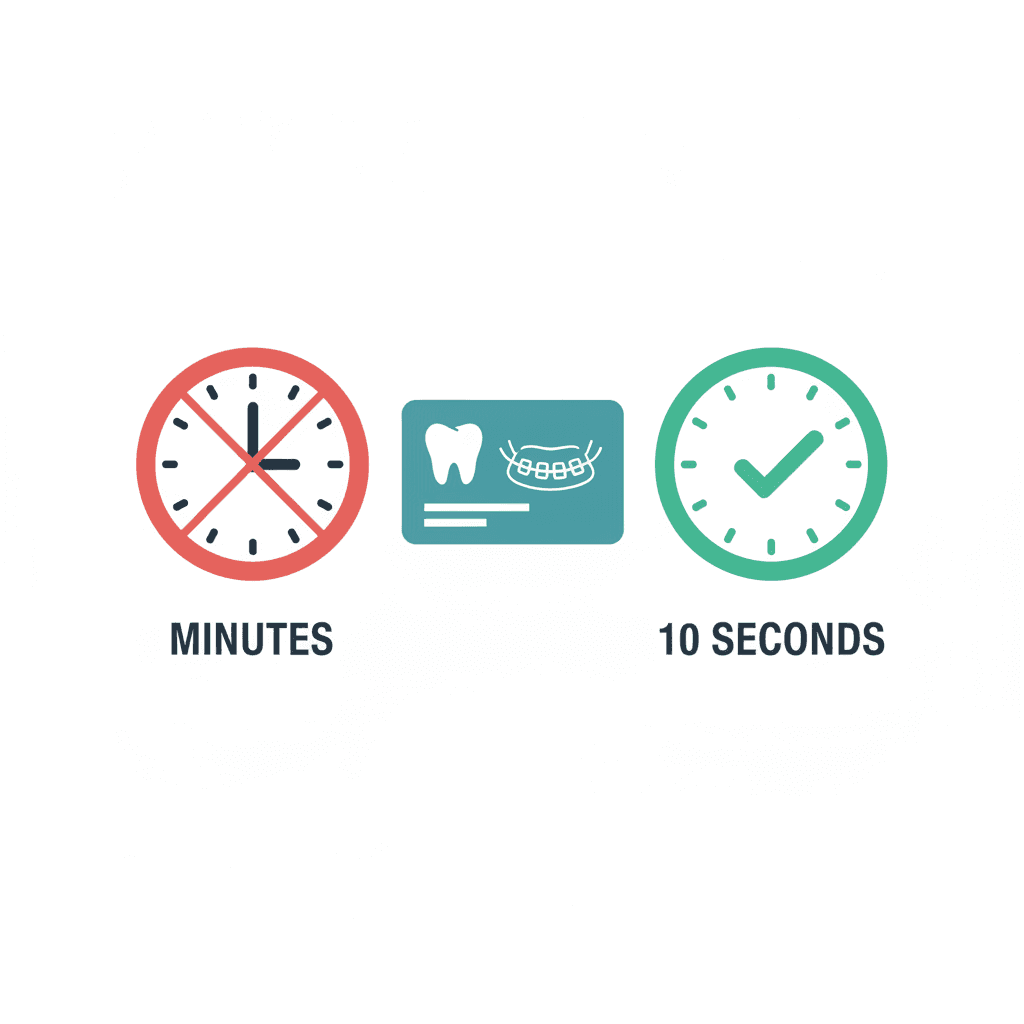
Orthia is built to fill exactly this gap. It integrates directly with Cloud 9, Dolphin, and Ortho2 to answer inbound calls 24/7, handle patient questions about scheduling and insurance, verify both dental and orthodontic insurance eligibility and benefits in under 10 seconds, and book appointments directly into the clinic's existing PMS calendar.
The PMS stays the system of record. Orthia handles the part of the workflow that the PMS was never designed to handle: the phone, the insurance question, and the after-hours patient who is ready to book right now.
How to Choose Your PMS
Choose Cloud 9 if:
You want zero local IT infrastructure. You operate multiple locations and need centralized cloud-native access. You are comfortable pairing it with a separate imaging solution. You are building a DSO or OSO and need scalable, lightweight architecture. For a deeper dive into Cloud 9 specifically, see our Cloud 9 orthodontic software guide.
Choose Dolphin if:
Clinical imaging and diagnostic analysis are core to your workflow. You or your doctors trained on Dolphin in residency. You have existing IT infrastructure. Ceph tracing, treatment simulation, and 3D case presentation are daily-use tools.
Choose Ortho2 Edge Cloud if:
You want the most inclusive all-in-one package without add-on fees. Built-in online scheduling, patient rewards, and virtual appointments matter. You value long-term vendor stability (40+ years exclusively in orthodontics). You are a startup that wants to avoid assembling a multi-vendor tech stack.
Regardless of Which You Choose
None of these systems answer your phones. None of them verify insurance during a patient call. None of them handle after-hours patient inquiries. You will need a solution for the gap between patient intent and PMS data entry. That is a separate decision, and it matters as much as your PMS choice.
Sources: Planet DDS / Cloud 9 product documentation; Patterson Dental / Dolphin Imaging product pages; Ortho2 / Edge Cloud product pages; Henry Schein One product listings; Capterra verified user reviews; Software Advice verified user reviews; G2 verified user reviews; SelectHub product analysis.
Frequently Asked Questions
Ortho2 Edge Cloud and Cloud 9 are the strongest options for startups. Ortho2's all-in-one approach avoids cobbling together multiple third-party tools. Cloud 9's lower entry cost and zero-infrastructure requirement appeal to budget-conscious new practices. Dolphin is generally better for established practices that need advanced imaging.
Yes, but data migration is significant. All three vendors offer migration services. Expect weeks to months depending on practice size. The biggest risk is data integrity during transition, particularly for active treatment records and insurance payment tracking.
All three offer some eligibility checking through clearinghouse integrations. However, none provide real-time orthodontic-specific verification including lifetime maximums, installment schedules, or works-in-progress clauses during a patient call. Orthia fills this gap with verification in under 10 seconds.
All three support installment-based payment structures. Ortho2's self-service financial arrangement feature lets patients adjust payment terms online. Dolphin's proposal tool provides strong in-office presentation. Cloud 9 is solid but less differentiated here.
Yes. Orthia integrates with Cloud 9, Dolphin, Ortho2, and 65+ other PMS systems. The integration allows real-time schedule access, direct appointment booking, insurance verification during calls, and practice-specific inquiry handling 24/7.
Cloud-based systems offer remote access, reduced IT costs, automatic updates, and easier multi-location management. Locally-installed systems can be faster for data-intensive imaging tasks. In 2026, the trend is clearly toward cloud. The main consideration is internet reliability at your clinic location.
OS
Olyver Sturdivant
Contributing writer at Orthia AI.