OS
Olyver SturdivantCloud 9 Orthodontic Software in 2026: What It Does, What It Doesn't, and What to Pair It With
Key Takeaways
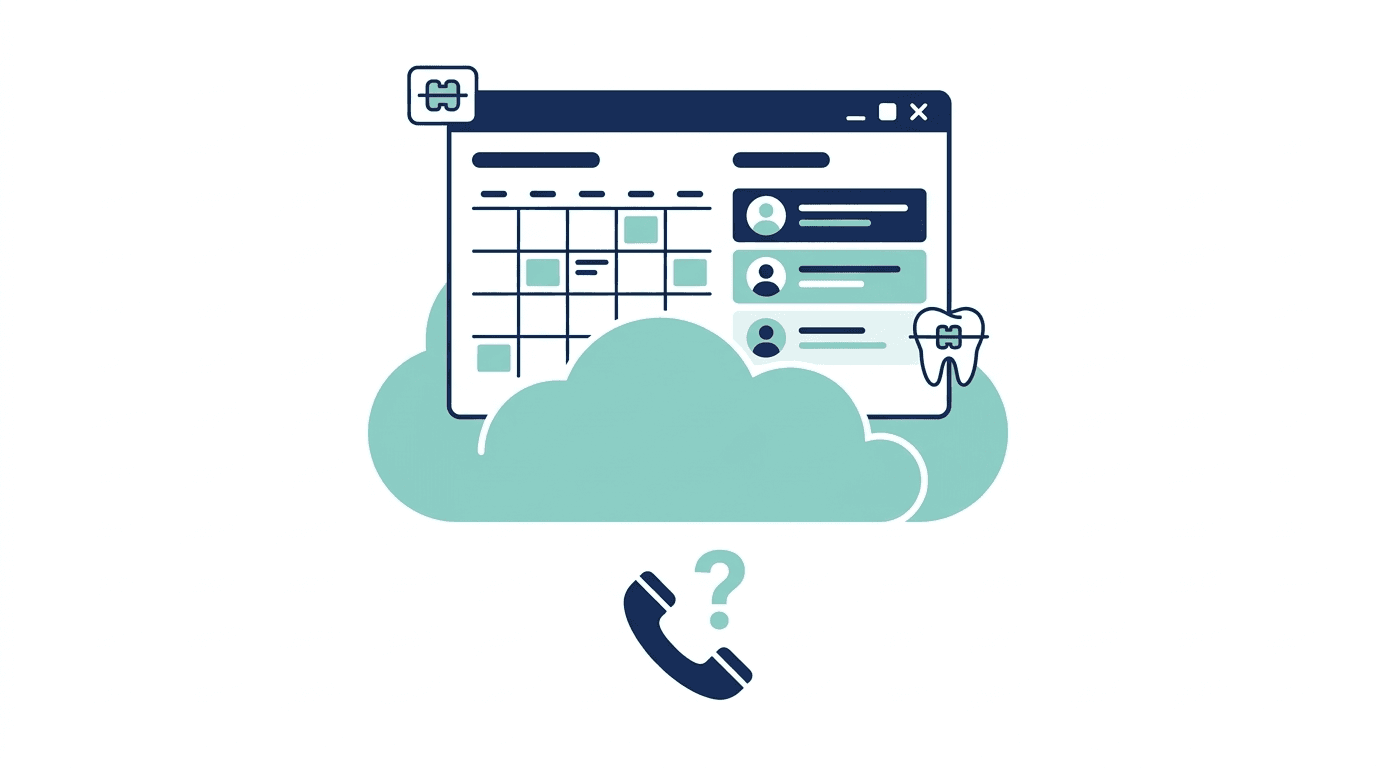
- Cloud 9 orthodontic software is the only fully cloud-native PMS built specifically for orthodontic clinics, groups, and OSOs. It handles scheduling, billing, charting, imaging, and patient communication from a browser.
- Cloud 9 now serves over 2,300 locations and approximately 28,000 users across North America under the Planet DDS umbrella.
- Cloud orthodontic software solves the server and remote access problem. It does not solve the phone problem, the insurance verification problem, or the after-hours patient capture problem.
- Practices running Cloud 9 are pairing it with AI-powered front desk tools to close the gap between what the PMS manages and what happens when the phone rings.
Cloud 9 orthodontic software holds a unique position in the orthodontic technology market. It is the only practice management system built from the ground up as a cloud-native platform exclusively for orthodontic clinics. That distinction matters, and it explains why Cloud 9 has become the PMS of choice for many multi-location orthodontic groups and OSOs.
But being the best cloud orthodontic software does not mean Cloud 9 solves every operational problem an orthodontic clinic faces. Understanding what Cloud 9 does well, where it has limitations, and what complementary tools practices need in 2026 requires looking at the platform honestly rather than through marketing material.
What Cloud 9 Does Well
Cloud 9 was purpose-built for orthodontic workflows. Unlike general dental PMS platforms that added orthodontic features as an afterthought, Cloud 9 understands the patient flow of an orthodontic clinic from initial call to debond. This orthodontic-specific architecture shows up in several areas.
True cloud architecture. Cloud 9 runs entirely in a browser. There are no local servers to maintain, no software to install, and no IT overhead for clinics to manage. Staff can access patient records, schedules, and financial data from any internet-connected device. For multi-location clinics and OSOs, this means centralized data access without VPN configurations or server synchronization issues.
Orthodontic-specific scheduling. The scheduling system in Cloud 9 was designed for orthodontic appointment patterns. It handles the complexity of recurring visits, chair time allocation, and provider-specific scheduling rules that orthodontic clinics require. New patient tracking is built into the platform, automating internal tasks from initial contact through treatment start.
Patient communication. Cloud 9 includes automated text and email reminders, digital forms, a patient portal, and marketing campaign tools. Patients can confirm appointments, submit information, and make payments online. The communication features are integrated directly into the PMS rather than requiring a separate third-party tool.
Financial management. Orthodontic billing is different from general dental billing. Treatment contracts span months or years, payment plans are the norm, and insurance benefit structures involve lifetime maximums and phased payments. Cloud 9 handles this complexity natively, including auto-pay, mobile wallet payments through Google Pay and Apple Pay, and CDT code management.
Scalability for groups and OSOs. Cloud 9's implementation approach is specifically designed for multi-location organizations. The platform handles complex data migrations from other PMS systems and offers training programs scaled to organizational size. This is why some of the largest orthodontic groups in the country run on Cloud 9.
What Cloud 9 Does Not Do
Every PMS has boundaries. Cloud 9 is no exception. Recognizing these gaps is not a criticism of the platform. It is an honest assessment of where the PMS ends and where other tools need to begin.
Cloud 9 does not answer your phone. When a patient calls your clinic at 7 PM on a Tuesday, Cloud 9 cannot pick up the phone, ask what they need, and book them into an available slot. The platform manages the schedule. It does not manage the interaction that leads to the schedule entry.
Cloud 9 does not verify orthodontic insurance during patient calls. The platform includes insurance-related features for claims processing and benefit tracking, but it does not perform real-time insurance eligibility verification while a patient is on the phone asking whether their plan covers braces — and orthodontic insurance verification is already far more complex than dental.
Cloud 9 does not capture after-hours leads. If a prospective new patient calls at 8 PM, they reach voicemail. Many of those callers will not call back — the real cost of a missed patient call in orthodontics is steeper than most owners realize. They will call the next clinic on their list. Cloud 9 manages the patients you have. It does not help you capture the patients you are losing.
Cloud 9 does not handle the gap between patient intent and PMS data entry. A parent decides they want to schedule their child's consultation. They pick up the phone. If nobody answers, that intent dies on the vine. Cloud 9 is the system of record. But the system of record cannot create a record if nobody answered the call.
Orthia fills the gap Cloud 9 was never designed to fill. Book a demo
The Cloud Orthodontic Software Landscape in 2026
Cloud 9 is not the only cloud orthodontic software option available, though it remains the only one that is fully cloud-native and exclusively orthodontic. Understanding how it compares to alternatives provides useful context.
Ortho2 Edge Cloud is the other major orthodontic-specific PMS. Ortho2 has over 40 years in the orthodontic software market and serves more than 25,000 users across 3,000 locations. Edge Cloud is a true cloud platform with integrated imaging, communication tools, online scheduling, and virtual appointment capabilities. It is a direct competitor to Cloud 9, with a strong reputation for customer service and a comprehensive all-in-one feature set.
Dolphin Management has been a mainstay in orthodontic clinic management since 1988. Dolphin offers both imaging and practice management software, with particular strength in cephalometric tracing and 3D imaging tools. However, Dolphin's practice management side has historically been more server-dependent, and some users report customer support challenges. Dolphin is now owned by Patterson Dental. For a head-to-head comparison, see our Dolphin PMS vs Dentrix Ascend vs Ortho2 Edge Cloud breakdown.
Dentrix Ascend is Henry Schein One's cloud-based PMS. While primarily a general dental platform, Dentrix Ascend includes orthodontic charting capabilities and recently introduced AI-powered features including digital forms with insurance card photo capture and an AI support agent called Claire. Dentrix Ascend serves more than 48,000 practices and 90% of the top 50 DSOs, but its orthodontic features are not as deep as platforms built exclusively for the specialty.
None of these platforms, including Cloud 9, answer your phones or verify insurance during patient calls. That operational gap exists across every PMS in the orthodontic market.
The Rise of AI-Native PMS Thinking
A growing conversation in orthodontic technology circles involves the concept of an AI native PMS, where artificial intelligence is not bolted onto existing software but integrated into the core architecture of practice management.
Today, no orthodontic PMS is truly AI-native. Dentrix Ascend has moved furthest in this direction within general dentistry, introducing AI-powered document processing and an AI support agent. But even these features operate at the edges of the platform rather than fundamentally reshaping how the PMS works.
For orthodontic clinics, the more practical question in 2026 is not "when will my PMS become AI-native?" but "what AI tools should I pair with my current PMS to solve the problems it was never designed to solve?"
The answer depends on your biggest operational gap. For many clinics, that gap is the phone.
What Happens When You Pair Cloud 9 with an AI Front Desk
Cloud 9 manages your schedule, your billing, your patient records, and your communications. An AI front desk tool handles the interaction layer that sits between the patient and the PMS.
When an orthodontic clinic pairs Cloud 9 with Orthia, the workflow looks like this:
A patient calls the clinic. Orthia answers, 24 hours a day, 7 days a week. The AI identifies whether the caller is a new or existing patient. For new patients, it collects relevant information and books a consultation directly into the Cloud 9 schedule. For existing patients, it handles rescheduling requests according to practice-specific rules. During the call, Orthia can verify both dental and orthodontic insurance eligibility and benefits in under 10 seconds.
Cloud 9 remains the system of record. Orthia handles the part of the workflow that Cloud 9 was never designed to handle. The PMS and the AI front desk are complementary, not competitive.
This pattern applies regardless of which cloud orthodontic software a clinic uses. Whether the PMS is Cloud 9, Ortho2 Edge Cloud, or Dolphin, the phone gap and the insurance verification gap remain. The AI front desk fills both.
See how Orthia integrates with Cloud 9. Book a demo
Common Concerns About Adding Another Tool
Orthodontic clinics are already managing multiple software systems. Adding another tool raises legitimate concerns.
"Will it complicate our workflow?" The purpose of an AI front desk is to simplify your workflow, not add to it. The AI handles calls that currently go to voicemail or interrupt your team mid-task. Your staff reviews a dashboard each morning instead of listening to a stack of voicemails.
"Will patients know they are talking to AI?" Modern voice AI uses natural-sounding speech with appropriate pacing and tone. Many patients do not realize they are speaking with AI. More importantly, most patients care about whether their question was answered and their appointment was booked, not whether a human or AI did it.
"How does it handle situations it cannot resolve?" Every well-designed AI system has fallback protocols. Calls that the AI cannot handle are transferred to the clinic or documented for staff follow-up. The system should never leave a patient stranded.
"What about HIPAA?" Any AI tool handling patient information must be HIPAA-compliant with a signed Business Associate Agreement. This is table stakes, not a differentiator.
The Honest Assessment
Cloud 9 orthodontic software is the leading cloud-native PMS for orthodontic clinics. It is well-designed, actively developed, and genuinely good at what it does. Practices that are still running on legacy server-based systems should seriously evaluate moving to a cloud orthodontic software platform like Cloud 9 or Ortho2 Edge Cloud.
But no PMS, no matter how capable, solves the phone problem. And in orthodontics, the phone problem is an operational and revenue problem that compounds every day it goes unaddressed.
The clinics that will operate most efficiently in 2026 and beyond are the ones that pair a strong PMS with purpose-built AI tools that handle the interaction layer the PMS was never designed to manage.
Frequently Asked Questions
Cloud 9 is the only fully cloud-native PMS built exclusively for orthodontic clinics. Whether it is best depends on your clinic's specific needs. Cloud 9 excels for multi-location groups and OSOs that need scalable cloud architecture. Ortho2 Edge Cloud is a strong alternative with deeper all-in-one features. The right choice depends on your clinic size, workflow preferences, and integration requirements.
Cloud orthodontic software is a practice management system that runs entirely in a web browser without requiring local servers. Patient data, schedules, and financial records are stored securely in remote data centers and accessible from any internet-connected device. Cloud 9 and Ortho2 Edge Cloud are the two leading cloud-native orthodontic PMS platforms.
Cloud 9 does not have a built-in AI phone answering feature. However, third-party AI front desk platforms like Orthia integrate directly with Cloud 9 to answer inbound calls, book appointments into the Cloud 9 schedule, and verify insurance during patient calls.
An AI native PMS would be a practice management system with artificial intelligence integrated into its core architecture rather than added as a bolt-on feature. No orthodontic PMS is truly AI-native in 2026. Dentrix Ascend has introduced some AI features for general dentistry. For orthodontic clinics, the current best approach is pairing a strong PMS with purpose-built AI tools for call handling and insurance verification.
Cloud 9 operates on a subscription pricing model with costs varying based on the number of users and features required. The company does not publish standard pricing. Contact Planet DDS directly for a quote tailored to your clinic size and needs.
Yes. Cloud 9 was specifically designed for multi-location orthodontic clinics, groups, and OSOs. The platform supports centralized data access, unified scheduling across locations, and organization-level reporting. Implementation support is available for complex multi-location deployments.
OS
Olyver Sturdivant
Contributing writer at Orthia AI.
Related Articles
Industry Insights
Best AI Phone Answering Services for Orthodontic Clinics in 2026
Read more
Industry Insights
Dolphin PMS vs Dentrix Ascend vs Ortho2 Edge Cloud: Which Orthodontic Software Should You Choose in 2026?
Read more
AI Automation
Orthodontic Insurance Verification in 2026: Why Your PMS Alone Is Not Enough
Read more