OS
Olyver SturdivantOrthodontic AI: What Actually Works, What Is Hype, and What Matters for Your Practice in 2026
Key Takeaways
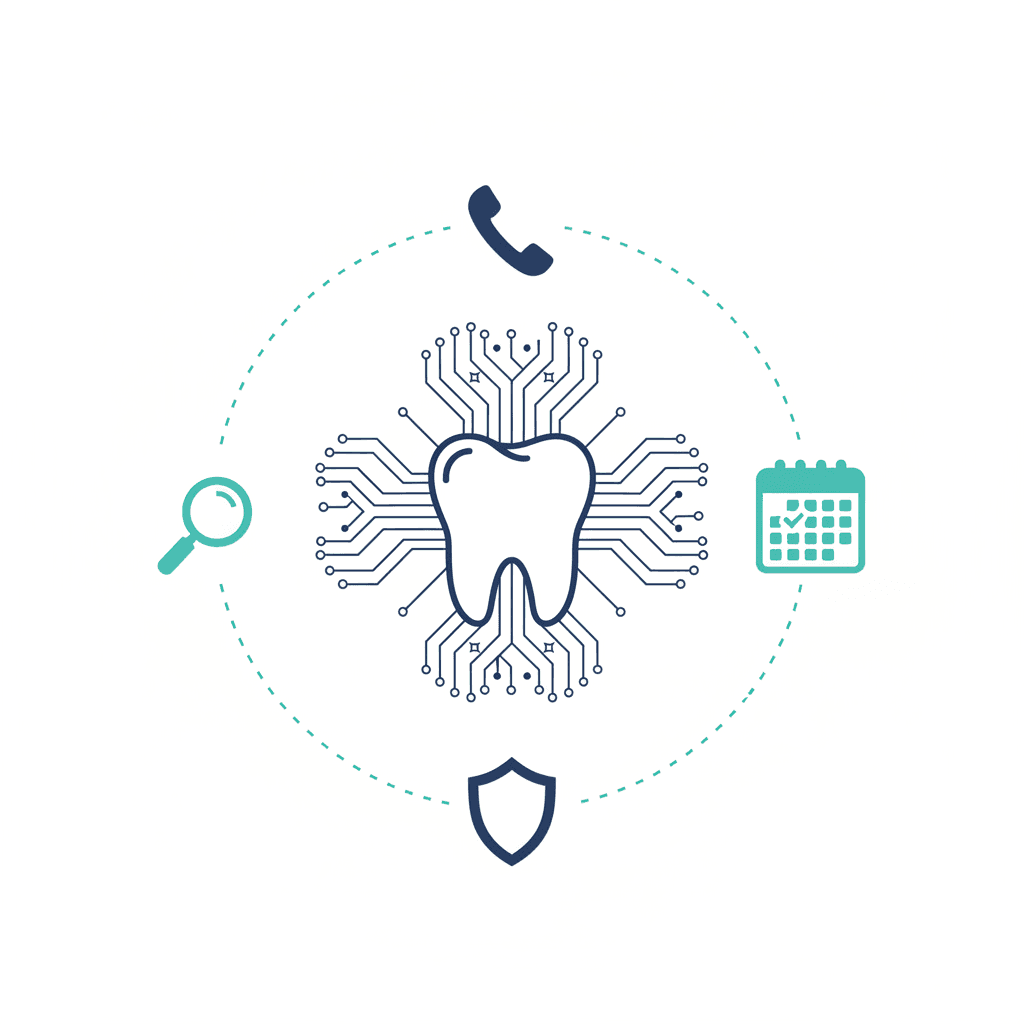
- AI in orthodontics falls into two distinct categories: clinical AI (diagnosis, treatment planning, imaging analysis) and operational AI (phone answering, scheduling, insurance verification, patient communication)
- Clinical AI is mostly still in research and pilot phases according to peer-reviewed literature; automated ceph tracing and treatment simulation are the most mature clinical applications
- Operational AI is production-ready today and delivers measurable ROI within weeks, not months; AI receptionists, automated reminders, and real-time insurance verification are all deployed at scale
- The FDA has approved 69+ AI products for healthcare with projections reaching 350 new products and $30.8 billion in funding by 2035, but most orthodontic-specific clinical AI tools still require manual validation
- AI-powered remote monitoring (Dental Monitoring, grin) enables virtual check-ins that reduce in-office adjustment visits by 20 to 40%, extending the doctor's capacity without adding chair time
- The highest immediate ROI for orthodontic clinics comes from operational AI, specifically 24/7 call answering, real-time insurance verification, and automated appointment booking into existing PMS platforms
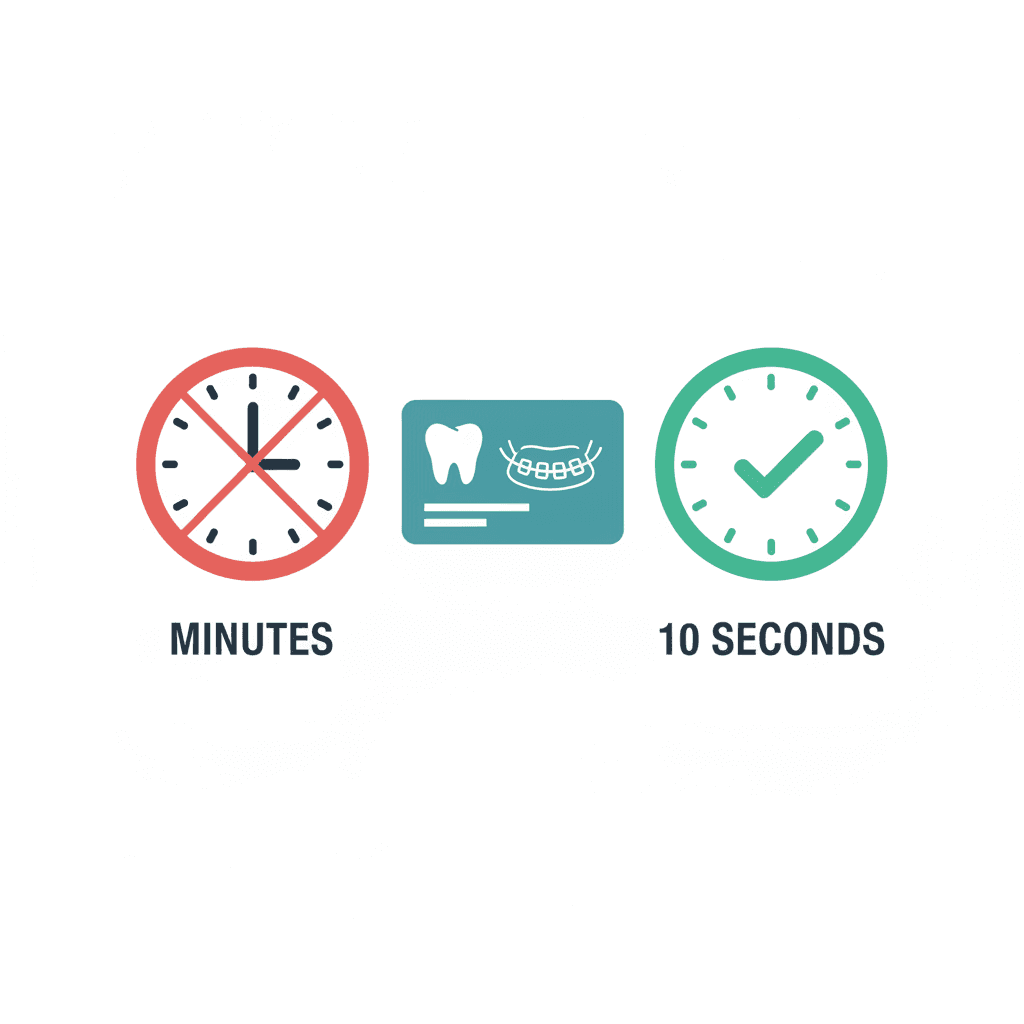
- Orthia is an operational AI platform built specifically for orthodontic clinics, answering every call, verifying insurance in under 10 seconds, and booking directly into Cloud 9, Dolphin, and Ortho2
Every orthodontic conference in 2026 features at least one panel on artificial intelligence. Every trade publication runs AI stories. Every software vendor claims AI capabilities. But when you strip away the marketing and look at what is actually production-ready, useful, and delivering measurable value in orthodontic clinics today, the picture is more nuanced than the hype suggests.
This is a practical guide to AI in orthodontics. Not the theoretical version. Not the "someday" version. The version that answers the question every clinic owner is actually asking: what should I care about, what should I invest in, and what should I ignore?
The Two Categories of Orthodontic AI
AI in orthodontics breaks down into two fundamentally different categories. Understanding this distinction matters because the maturity, ROI timeline, and implementation requirements are completely different.
Clinical AI: Diagnosis and Treatment Planning
Clinical AI applies machine learning and computer vision to diagnostic and treatment planning tasks that traditionally require a clinician's expertise.
Cephalometric analysis is the most mature clinical AI application. AI-powered ceph tracing can identify anatomical landmarks on lateral cephalograms with accuracy that approaches or matches manual tracing. Dolphin Imaging has integrated AI-assisted tracing capabilities, and standalone tools like CephX have received FDA clearance for 3D imaging integration. Multiple peer-reviewed studies confirm that these tools are effective overall, though manual adjustments may still be required in clinical practice.
Treatment outcome prediction uses historical case data to predict how teeth will move under specific force applications. Clear aligner companies (Align Technology, for example) use AI models to plan tooth movement sequences. The accuracy continues to improve, but a 2026 narrative review published in Bioengineering noted that clinicians must still evaluate AI-provided clinical suggestions before accepting them.
Skeletal maturation assessment uses AI to evaluate cervical vertebral maturation from lateral cephalograms, eliminating the need for separate hand-wrist radiographs. Multiple studies have demonstrated high accuracy, with some AI models reaching 94%+ success rates for deep overbite correction guidance.
Remote monitoring is where clinical AI meets daily operations. Platforms like Dental Monitoring and grin use AI-powered image analysis to evaluate treatment progress from patient-submitted photos. This reduces the number of in-office visits required during active treatment, extending doctor capacity without adding chair time.
The important caveat: most clinical AI applications are in research or early-pilot stages. A comprehensive review published in February 2026 in MDPI specifically categorized which orthodontic AI tools are in research, pilot, or routine use. The conclusion was clear. Automated ceph tracing and digital treatment planning are in routine use. Most other clinical AI applications are still in research or pilot phases, and they require clinician oversight before clinical decisions are made.
Operational AI: Practice Management and Patient Communication
Operational AI applies conversational AI, natural language processing, and workflow automation to the business side of the clinic. This is the category where AI is already production-ready and delivering measurable returns.
AI receptionists answer inbound patient calls using natural language processing, handle common questions, check schedule availability in real time, and book appointments directly into practice management systems. Unlike traditional answering services that take messages, AI receptionists complete the scheduling workflow during the call.
Insurance eligibility verification uses real-time API connections to insurance clearinghouses and payer databases to verify both dental and orthodontic coverage in seconds rather than the 15 to 30 minutes a manual phone call requires.
Automated patient communication includes appointment reminders, recall messages, treatment milestone notifications, and follow-up sequences triggered by specific events (missed appointment, treatment completion, retainer check due date).
Predictive analytics for no-show prevention uses historical patient behavior data to identify high-risk appointments and trigger targeted interventions (additional reminders, staff follow-up calls) before the missed appointment occurs.
The distinction between clinical and operational AI matters because the ROI timelines are completely different. Clinical AI requires practice-level validation, clinician training, and workflow redesign before it delivers value. Operational AI can be implemented in days and starts delivering measurable value within the first week.
Where the ROI Actually Lives
If you are an orthodontic clinic owner evaluating where to invest in AI, here is the honest assessment of ROI by category.
Immediate ROI (Days to Weeks)
AI call answering and scheduling delivers the fastest return. Every orthodontic clinic misses calls. The revenue lost from missed calls is significant — every missed new patient call represents $3,000 to $8,000 in potential treatment value. An AI receptionist that captures even 3 to 5 additional new patient appointments per month generates $15,000 to $40,000 in incremental case value.
Insurance eligibility verification in real time eliminates 10 to 15 hours per week of staff phone time. The true cost of orthodontic insurance verification goes well beyond labor — at $22 to $28 per hour, that is $11,000 to $21,000 in annual labor savings, plus the downstream value of fewer verification errors and faster treatment starts.
Automated appointment reminders reduce no-show rates by approximately 23% based on a study of 1.6 million dental appointments published in Dental Tribune. For a clinic with a 20% no-show rate and 80 adjustment appointments per week, reducing no-shows by 23% recovers approximately 3 to 4 appointments per week in chair time.
Medium-Term ROI (Months)
Remote monitoring reduces in-office adjustment visits by 20 to 40% for applicable cases. This frees up chair time that can be used for new patient consultations and treatment starts. The ROI depends on how you redeploy that freed capacity. If it sits empty, there is no ROI. If you fill it with revenue-generating appointments, the math is compelling.
AI-enhanced treatment planning with clear aligners can reduce the treatment planning cycle time by hours per case. If your doctor spends 20 minutes per aligner case reviewing and modifying AI-generated staging, compared to 45 minutes for fully manual staging, the time savings across 15 to 20 aligner cases per month is significant.
Long-Term ROI (Years)
AI-powered cephalometric analysis saves time per case but the time savings per individual patient are measured in minutes, not hours. The ROI compounds over years as the tool is used across thousands of patients. The bigger value may be in diagnostic consistency rather than time savings.
Predictive analytics for treatment outcomes will eventually allow orthodontists to choose between treatment approaches with data-backed confidence intervals. This is still largely research-stage, but the potential value is in reducing retreatment rates and improving case acceptance through better outcome visualization.
What to Invest in Now vs. What to Watch
Invest Now
AI receptionist for call answering and scheduling. This is the single highest-ROI AI investment for an orthodontic clinic in 2026. Our complete guide to AI receptionists for orthodontic clinics covers everything you need to know. The technology is mature, the implementation is fast, and the return is measurable within the first month. Orthia is built specifically for orthodontic clinics, integrating with Cloud 9, Dolphin, and Ortho2 to answer every call 24/7, verify both dental and orthodontic insurance in under 10 seconds, and book appointments directly into your PMS.
Automated patient communication. If you are not already using automated appointment reminders, start. The evidence for no-show reduction is strong and the cost is minimal. Most PMS platforms (Cloud 9, Ortho2) include some level of automated communication. Third-party tools add more sophisticated multi-channel sequences.
Remote monitoring (if you treat with aligners at volume). If aligner cases represent a significant portion of your caseload, remote monitoring tools pay for themselves in freed chair time. Evaluate Dental Monitoring or grin based on your case mix and workflow.
Watch Closely
AI-enhanced treatment planning and digital setups. The technology is advancing rapidly, especially for clear aligner staging. It is worth evaluating new capabilities as they are released by your aligner vendor, but do not switch your entire treatment planning workflow based on vendor marketing alone.
Predictive analytics for patient behavior. Tools that predict no-show risk, treatment compliance, and case acceptance probability are emerging. They are not yet production-ready for most orthodontic clinics, but they will be within 2 to 3 years.
Ignore for Now
Fully autonomous clinical AI. No AI system should be making unsupervised clinical decisions in orthodontics. Peer-reviewed literature is clear on this. AI assists the clinician. It does not replace the clinician. If a vendor claims their AI eliminates the need for clinical judgment, that is a red flag.
AI-powered robotics for orthodontic procedures. This appears in academic literature as a future prospect but has no production-ready applications in orthodontic clinics today.
Generic "AI-powered" PMS features. Many software vendors are adding "AI" labels to features that are really just improved automation or better search algorithms. If the feature does not use machine learning to improve over time based on data, it is not AI. It is marketing.
The Operational AI Stack for Orthodontic Clinics
If you are building an AI-enabled orthodontic clinic today, here is the operational stack that delivers the most value.
Layer 1: PMS (Foundation). Cloud 9, Dolphin, or Ortho2. This is your system of record for scheduling, patient records, billing, and clinical data. See our PMS comparison guide for details.
Layer 2: AI Receptionist (Front Door). Orthia. Answers every inbound call 24/7. Books appointments directly into your PMS. Verifies dental and orthodontic insurance in under 10 seconds. Handles patient questions about office hours, location, and services. This layer sits between your patients and your PMS, handling the phone-based workflow that your PMS was never built to handle.
Layer 3: Patient Communication (Ongoing). Automated reminders, recall sequences, and treatment milestone messages. Some of this is built into your PMS. Orthia supplements with AI-powered call and text communication.
Layer 4: Clinical AI (Chair-Side). AI-assisted ceph tracing, digital treatment planning, and remote monitoring. This layer is practice-specific based on your clinical workflow and case mix.
Each layer builds on the one below it. You cannot benefit from AI-enhanced treatment planning (Layer 4) if you are losing patients at the phone call stage (Layer 2). The stack works from the front door inward.
Sources: "Present and Future of the Use of Artificial Intelligence in Orthodontics" (MDPI Bioengineering, February 2026); "Application of Artificial Intelligence in Orthodontics: Current State and Future Perspectives" (PMC, 2023); "AI in Orthodontics: Revolutionizing Diagnostics and Treatment Planning" (PMC, 2024); "Artificial Intelligence in Revolutionizing Orthodontic Clinic" (World Journal of Methodology, 2025); Frontiers in Dental Medicine AI-driven orthodontic treatment management review (2025); FDA AI product approval data.
Frequently Asked Questions
Orthodontic AI refers to artificial intelligence tools designed for orthodontic clinic workflows. It includes clinical AI (cephalometric analysis, treatment planning, remote monitoring) and operational AI (call answering, appointment scheduling, insurance verification, patient communication). Clinical AI assists with diagnosis and treatment decisions. Operational AI handles the business and administrative side of running the clinic.
No. Peer-reviewed literature is clear that AI assists orthodontic clinicians but does not replace clinical judgment. AI tools help with data analysis, pattern recognition, and administrative automation, but treatment decisions remain with the orthodontist. The most immediate impact of AI is on the operational side of the clinic, handling tasks like phone calls, scheduling, and insurance verification that do not require clinical expertise.
The fastest ROI comes from operational AI, specifically an AI receptionist that answers calls 24/7 and books appointments directly into your PMS. Every captured call that would otherwise go to voicemail represents $3,000 to $8,000 in potential treatment value. Practices typically see measurable results within the first week of implementation. Orthia delivers this by integrating with Cloud 9, Dolphin, and Ortho2 to handle the call-to-appointment workflow automatically.
Yes. Orthia verifies both general dental and orthodontic insurance eligibility and benefits in under 10 seconds. This replaces the 15 to 30 minute manual verification call. The system returns benefit data including coverage status, which your treatment coordinator can use to prepare accurate financial presentations before the consultation.
Production-ready AI tools include AI receptionists (Orthia), automated cephalometric tracing (integrated in Dolphin and standalone tools like CephX), AI-assisted aligner staging (through major aligner vendors), remote monitoring platforms (Dental Monitoring, grin), and automated patient communication systems. Tools that are still in research or pilot phases include fully autonomous treatment planning, predictive treatment outcome modeling, and AI-powered robotics.
Orthia focuses specifically on operational AI for the front desk, not clinical AI. It answers every inbound call 24/7, verifies dental and orthodontic insurance in under 10 seconds, and books appointments directly into Cloud 9, Dolphin, and Ortho2. Clinical AI tools like ceph tracing software and remote monitoring platforms serve different functions and are complementary to Orthia, not competitive with it.
OS
Olyver Sturdivant
Contributing writer at Orthia AI.