OS
Olyver SturdivantOrthodontic Patient Conversions: Where Practices Lose Patients at Every Stage
Key Takeaways
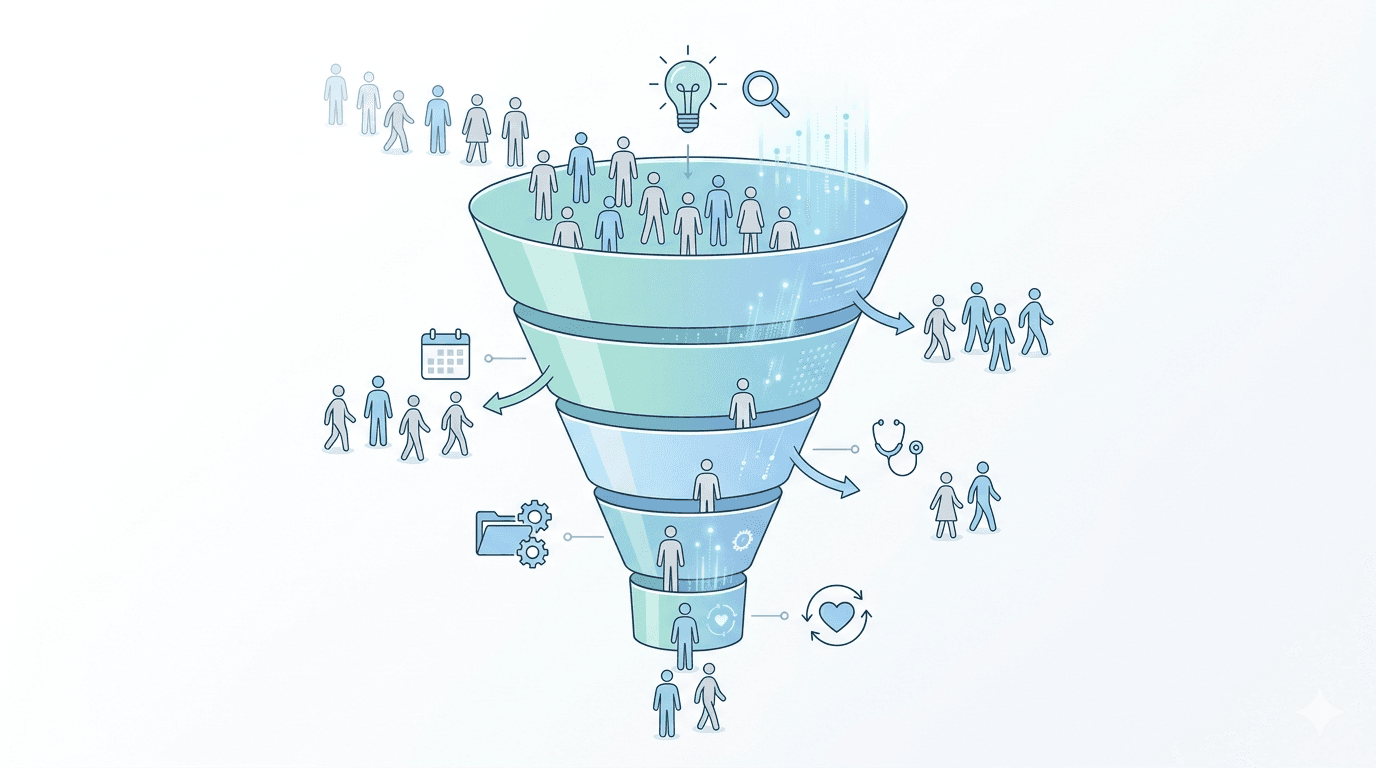
- Orthodontic patient conversions happen across a five-stage funnel: inquiry, scheduling, exam attendance, treatment acceptance, and treatment start. Most clinics only measure the last two stages and miss where the real leakage occurs.
- Gaidge Analytics reports a 68% average conversion rate across U.S. orthodontic clinics. Planet DDS data from 1,500 practices shows case acceptance averaging 64.4%. Most owners believe their rate is 80% or higher.
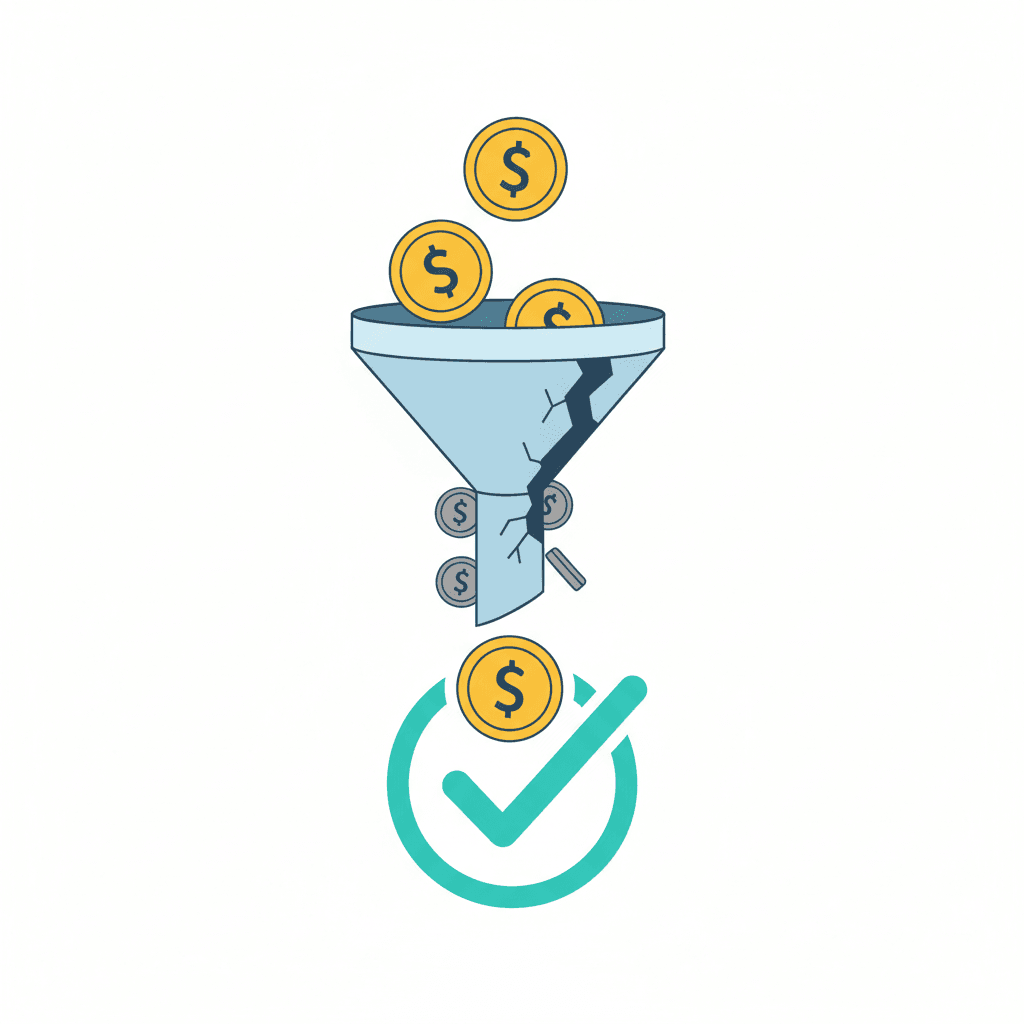
- The gap between a 65% and 85% conversion rate in a clinic doing 30 consults per month at $5,500 average case value is roughly $396,000 per year in production.
- The two stages with the highest leverage for improving orthodontic patient conversions are Stage 1 (phone response speed) and Stage 4 (financial presentation transparency).
TL;DR: Orthodontic patient conversions span five stages from inquiry to treatment start. If each stage converts at 85%, end-to-end conversion is only 44%. The two highest-leverage fixes are Stage 1 (answering every call — practices miss 20-38% during business hours) and Stage 4 (presenting financials with precision, not estimates). The gap between 65% and 85% conversion at 30 consults/month is $396,000/year.
Orthodontic patient conversions are not a single number. They are a chain of events, and the chain breaks at different points in different practices. The problem is that most orthodontists only measure one link in the chain and assume the rest is working.
This post breaks down each stage of the orthodontic patient conversion funnel, identifies where the most common losses occur, and explains what high-performing clinics do differently at each stage. We published a deep dive on orthodontic new patient conversion rates that covers the benchmarking data in detail. This post focuses on the operational fixes.
The Five Stages of Orthodontic Patient Conversion
Every new patient who starts treatment passed through five stages. Every patient you lost dropped out at one of them.
Stage 1: Inquiry to contact. A prospective patient or parent calls, submits a web form, or sends a message. The clinic responds. The conversion metric here is contact rate: what percentage of inquiries receive a response, and how quickly?
Stage 2: Contact to scheduled exam. The prospective patient has been reached. Now they need to agree to schedule a consultation. The conversion metric is scheduling rate: what percentage of contacted inquiries become booked exams?
Stage 3: Scheduled exam to attended exam. The appointment is on the calendar. The patient needs to show up. The conversion metric is show rate: what percentage of scheduled exams are actually attended?
Stage 4: Exam to treatment acceptance. The patient has been examined. The doctor recommends treatment. The patient and their family decide whether to proceed. The conversion metric is case acceptance rate. This is the number most orthodontists think of when they hear "conversion rate."
Stage 5: Treatment acceptance to treatment start. The patient said yes. Now they need to actually start treatment. Contracts need to be signed, financial arrangements need to be finalized, and the first clinical appointment needs to be scheduled and attended. The conversion metric is start rate: what percentage of accepted cases actually begin treatment?
If each stage converts at 85%, which sounds excellent at every individual stage, the end-to-end conversion from inquiry to treatment start is only 44%. Five stages at 85% each: 0.85 multiplied across five stages. The math is unforgiving.
Stage 1: Where Most Practices Lose the Most Patients
Stage 1 is the highest-leverage point in the orthodontic patient conversion funnel because it is the stage most clinics handle worst and the stage where improvement compounds through every subsequent stage.
Industry data tells a consistent story. Dental clinics miss between 20% and 38% of incoming phone calls during business hours. After hours, the miss rate is effectively 100% unless the clinic has an answering service or AI system in place. When a caller reaches voicemail, roughly 75% to 80% do not leave a message and do not call back. They call the next clinic on their list.
For orthodontic clinics specifically, the math is worse than general dental. The average orthodontic case value is $5,500 or higher. A missed call from a new patient inquiry is not an $850 loss like it might be for a general dental cleaning. It is potentially a $5,500 or more loss in immediate production, plus referrals, plus sibling cases.
The AAO's 2025 Economics Survey reported record patient counts, with an average of 696 active patients per member. Demand is not the problem. Capturing demand is the problem.
What high-performing clinics do at Stage 1:
They answer every call. Not most calls. Every call. The clinics with the best conversion metrics treat phone coverage as infrastructure, not staffing. They use a combination of trained front desk staff during business hours and an AI phone system or live answering service for overflow and after-hours coverage.
Speed matters here in a way it does not at other stages. A clinic that answers within three rings converts significantly more inquiries than a clinic that averages five-plus rings or goes to voicemail. The patient's intent to schedule is highest in the moment they pick up the phone. Every second of delay erodes that intent.
Orthia answers every inbound call 24/7 and books new patient appointments directly into the clinic's PMS. See how it works.
Stage 2: The Scheduling Conversation
Once the patient is on the phone, the quality of the scheduling conversation determines whether they book an exam. This is where front desk training makes a measurable difference.
Common failure modes at Stage 2 include: putting the caller on hold, transferring them multiple times, asking too many questions before offering an appointment, failing to create urgency, and not addressing the caller's primary concern. Parents calling about their child's teeth want to know two things: is this something that needs attention, and when can they be seen? Everything else is secondary.
The scheduling conversation is also where insurance questions first arise. If a parent asks whether their plan covers braces and the front desk cannot answer, the call often ends without a booked appointment. The parent says they will call back after checking with their insurance company. Most do not call back.
This is one of the most underappreciated leakage points in orthodontic patient conversions. Real-time insurance verification during the initial call removes the single largest reason prospective patients delay scheduling. When the front desk or AI system can confirm coverage and provide a benefit estimate on the spot, the scheduling rate increases because the patient's questions are answered before they hang up.
Stage 3: Reducing No-Shows
Show rates for orthodontic consultations typically range from 80% to 90%. A 10% no-show rate on 30 monthly exams means three patients per month never walked through the door despite being scheduled.
The standard fixes are well-known: automated text and email reminders, confirmation requests, and same-day reminder calls. Most modern PMS platforms including Cloud 9 and Ortho2 handle this natively. The clinics that push show rates above 90% typically add one additional step: a personal touch between scheduling and the appointment date.
This might be a welcome text from the treatment coordinator, a short video about what to expect at the consultation, or a pre-appointment form that gets the patient invested in the process before they arrive. The principle is simple: the more engagement between booking and the appointment, the less likely the patient is to forget or deprioritize it.
Stage 4: Financial Presentation and Case Acceptance
Stage 4 is where most orthodontists focus their conversion attention. Case acceptance after the exam is the most visible conversion point and the one most influenced by the doctor and treatment coordinator.
The national average case acceptance rate sits around 64% to 68% based on Gaidge and Planet DDS data. High-performing clinics hit 80% or above. The difference is rarely clinical. It is almost always financial.
Patients do not decline orthodontic treatment because they disagree with the clinical recommendation. They decline because they are uncertain about the financial commitment. Uncertainty is the enemy of case acceptance. When the financial presentation is unclear, when the patient does not understand their insurance benefits, when payment options are not presented with specificity, the default decision is to wait.
What high-performing clinics do at Stage 4:
They present financial information with precision, not ballpark estimates. They know the patient's insurance benefits before the exam (because verification happened at Stage 1 or Stage 2). They present multiple payment options with exact monthly amounts. They discuss affordability, not cost.
The treatment coordinator role is critical here. Practices that have a dedicated, trained TC consistently outperform practices where the doctor handles the financial conversation or where a rotating staff member fills the role. Case acceptance is a skill. It requires practice, consistency, and genuine comfort discussing money.
Stage 5: The Forgotten Stage
A surprising number of accepted cases never convert to starts. The patient said yes. Then life happened. The contract was not signed that day. The financial arrangement required a follow-up conversation. The first appointment was scheduled too far out. The urgency faded.
Practices that track their treatment-accepted-to-start rate often discover it sits between 85% and 95%. That 5% to 15% loss seems small but on an annualized basis in a clinic that accepts 200 cases per year, a 10% Stage 5 loss is 20 cases, which is $110,000 in production at $5,500 average case value.
The fix is process discipline. Same-day contract signing. Financial arrangements finalized before the patient leaves. First clinical appointment scheduled within two weeks of acceptance, not six. Follow-up calls or texts to any patient who leaves without completing all steps.
Measuring the Full Funnel
Most practice management systems and analytics platforms give you pieces of the funnel. Gaidge tracks from new patient add through start. OrthoFi tracks from financial presentation through start. Your PMS tracks scheduled appointments.
What most clinics lack is a single view of the entire funnel from first inquiry through treatment start. Building this view requires connecting data from your phone system (Stage 1), your PMS (Stages 2 and 3), and your treatment coordination process (Stages 4 and 5).
This is where AI-powered front desk tools are starting to add value beyond phone answering. When the AI handles Stage 1 and logs every interaction, you gain data about inquiry volume, response time, and contact rate that most clinics have never had. That data lets you diagnose whether your conversion problem is a Stage 1 problem (you are not answering the phone) or a Stage 4 problem (you are not closing cases in the chair).
The difference between those two problems requires entirely different solutions. Without the data, you are guessing.
Where to Start
If you do not know your conversion rate at each stage, start by measuring Stage 1 and Stage 4. These are the two highest-leverage points and the two where the gap between average and top-performing clinics is widest.
For Stage 1, pull your phone system data. How many inbound calls are you receiving? How many are answered? How many go to voicemail? If you do not have this data, that is your first problem to solve.
For Stage 4, pull your exam-to-start ratio from your PMS or analytics platform. If it is below 70%, your financial presentation process is the bottleneck. If it is above 80%, your bottleneck is probably upstream at Stage 1 or Stage 2.
Improving orthodontic patient conversions is not about doing one thing better. It is about finding the weakest link in a five-stage chain and strengthening it before investing in anything else. Marketing brings more people to the top of the funnel. Conversion optimization makes sure they do not leak out before reaching the bottom.
Frequently Asked Questions
It depends on which stage you are measuring. For end-to-end conversion from initial inquiry to treatment start, top-performing clinics achieve 50% to 60%. For case acceptance after exam (Stage 4 only), the industry average is 64% to 68%, and high-performing clinics reach 80% or above.
Most orthodontists mentally estimate their conversion rate based on the patients they see in the chair, not the patients who called but never scheduled. If your clinic misses 30% of incoming calls and 75% of those callers never call back, you are losing patients before you even know they exist.
Significantly. Practices that answer within three rings convert substantially more inquiries than practices that go to voicemail. Speed of response is the single most important variable at Stage 1.
If your Stage 1 contact rate is below 85% or your Stage 4 case acceptance is below 70%, fix conversion before adding marketing spend. Generating more leads into a leaky funnel is the most expensive way to grow.
AI addresses Stage 1 directly by ensuring every call is answered, every inquiry is captured, and appointments are booked in real time. This removes the single largest source of patient loss in most clinics.
OS
Olyver Sturdivant
Contributing writer at Orthia AI.