OS
Olyver SturdivantAI Front Desk for Texas Orthodontic DSOs: What DFW, Houston, Austin, and San Antonio Groups Are Deploying in 2026
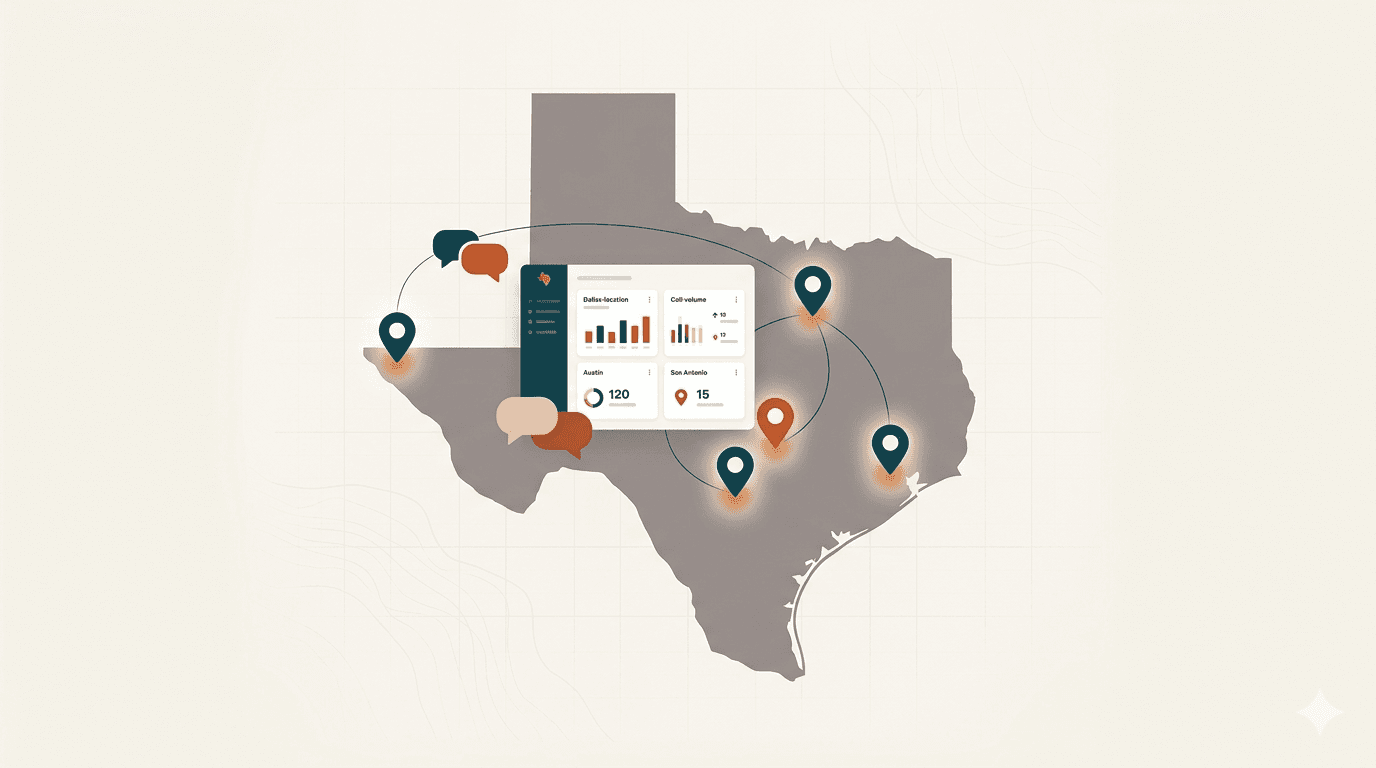
Key Takeaways
- Texas is home to more orthodontic DSOs and multi-location groups than almost any other state, concentrated in the DFW Metroplex, Greater Houston, Austin-Round Rock, and San Antonio-New Braunfels metros. Most are running a mix of Cloud 9, Dolphin, and Ortho2 across locations — which breaks most generic AI front desk tools.
- Texas orthodontic patient demand is bilingual in most metros. Practices in Houston, San Antonio, and the Rio Grande Valley are losing inquiries when after-hours calls go to English-only voicemail.
- Central Time Zone creates a longer effective after-hours window for East Coast and West Coast referral patterns. Texas practices receive inbound calls across a 19-hour daily window.
- The ROI math for a 5-location Texas DSO running a centralized call center ($180K-$280K/year) versus an AI front desk ($30K-$42K/year per 5 locations) is not subtle — and the AI front desk adds 24/7 coverage the call center does not.
- Multi-PMS support matters more in Texas than in most states. It is common for Texas orthodontic groups to have acquired practices running different PMS systems simultaneously.
- For Texas DSOs specifically, the biggest operational wins are standardized call handling across locations, bilingual English-Spanish coverage, centralized reporting, and real-time orthodontic insurance verification across state-specific carriers including Delta Dental of Texas and BCBSTX.
Texas orthodontics operates differently than orthodontics in most other states. The market is larger, the multi-location footprint is denser, the patient mix is more bilingual, and the DSO consolidation curve is further along than in the Northeast or Midwest. For Texas-based orthodontic groups running two, five, or twenty locations, the operational challenges of standardizing the front desk layer across locations have become one of the dominant growth bottlenecks.
This post covers what Texas orthodontic DSOs and multi-location clinics are actually deploying for AI front desk infrastructure in 2026, what the ROI math looks like in the four major Texas metros, and where generic dental AI tools fall short of what Texas-specific operational realities require.
No affiliate links. No vendor sponsorship. Based on the operational patterns seen across live deployments and market observation.
Why the Texas Orthodontic Market Is Structurally Different
Four factors make Texas orthodontics operationally different from most other state markets:
Multi-location density. The top 10 orthodontic groups in Texas each operate between 4 and 30+ locations. The ratio of group-practice locations to independent solo practices is higher than the national average. Practice acquisitions in Texas have accelerated since 2020, and most acquiring groups have inherited a patchwork of PMS systems that were never consolidated.
Bilingual patient demand. Houston, San Antonio, the Rio Grande Valley, Laredo, and El Paso have Spanish-dominant or Spanish-bilingual patient populations in significant numbers. Dallas-Fort Worth and Austin have large bilingual populations as well. A front desk system that handles only English is leaving calls unanswered from families who would otherwise book.
Time zone position. Texas sits in Central Time. For clinics with referral networks or relocating patients from East Coast markets (common for Houston energy-sector families) or West Coast markets (common in Austin tech corridors), the effective call window extends from 6 AM Pacific through 10 PM Eastern — roughly 19 hours of relevant demand in local Central Time.
Insurance mix. Texas orthodontic clinics deal with a state-specific insurance mix heavy on Delta Dental of Texas, BlueCross BlueShield of Texas, United Concordia, and state CHIP program coverage. Generic dental AI tools often verify the national carrier plans cleanly but fall short on state-specific plan variants.
Each of these has practical implications for AI front desk deployment.
The Four Major Texas Metros and Their Orthodontic Operational Patterns
Dallas-Fort Worth Metroplex
The DFW Metroplex is the largest orthodontic market in Texas by location count and by new patient production volume. The metro hosts several of the state's largest orthodontic groups, heavy private equity activity in the DSO space, and one of the densest concentrations of Cloud 9 users in the state.
DFW-specific operational patterns:
- Multi-location groups commonly operate 4-12 locations spanning Plano, Frisco, McKinney, Southlake, Colleyville, Grapevine, Arlington, Fort Worth, and the suburban Dallas corridor along US-75.
- Cloud 9 is the dominant orthodontic PMS in the metro. Dolphin has strong secondary presence. Ortho2 is less common but growing.
- Affluent suburban demographics drive higher case values — DFW orthodontic case values often run 10-20% above national averages.
- Evening call volume is disproportionately high in DFW, reflecting working professional parents in Plano, Frisco, and Southlake who handle family administration after 6 PM.
- Competition among orthodontic clinics is intense. The first practice to answer a parent's call typically wins the consultation.
For a DFW orthodontic DSO running 5 locations on Cloud 9, the AI front desk deployment priorities are: real-time Cloud 9 integration, centralized reporting across locations, bilingual English-Spanish coverage for the Arlington and Irving corridors, and after-hours coverage to capture the 5-9 PM evening block.
Greater Houston
Houston is the second-largest orthodontic market in Texas and has the most linguistically diverse patient population. The metro covers an unusually wide geographic spread — from Katy in the west to Kingwood in the north to Pearland in the south to Clear Lake in the southeast — and orthodontic groups typically operate locations spanning multiple submarkets.
Houston-specific operational patterns:
- Multi-location groups common in the 4-15 location range, often with geographic clustering around Energy Corridor / Katy, the Woodlands / Spring, Sugar Land / Bellaire, and Clear Lake / League City.
- PMS mix is more varied than DFW. Cloud 9, Dolphin, Ortho2, and legacy Dentrix installations all present in meaningful numbers.
- Spanish-bilingual patient demand is higher than any other Texas metro except the Rio Grande Valley and San Antonio. Practices in Spring Branch, Pasadena, Gulfton, and Alief routinely see 40-60% of new patient calls from Spanish-dominant or bilingual families.
- Energy-sector employment creates a specific scheduling pattern — families with offshore rotation schedules or on-call energy workers need scheduling flexibility that rigid business-hours-only booking cannot accommodate.
For a Houston orthodontic group, the AI front desk deployment priorities are: multi-PMS support across mixed Cloud 9 / Dolphin / Ortho2 environments, true bilingual Spanish-English capability, scheduling flexibility for non-standard work schedules, and state-specific insurance verification (Delta Dental of Texas, BCBSTX, Aetna Texas plans).
Austin-Round Rock
The Austin metro is the fastest-growing orthodontic market in Texas and has specific operational characteristics tied to the tech corridor demographics and the accelerated migration of families from California, the Pacific Northwest, and the Northeast.
Austin-specific operational patterns:
- Multi-location groups typically in the 3-8 location range, clustered around North Austin (Cedar Park, Round Rock, Pflugerville), West Austin (Westlake, Bee Cave, Lakeway), and South Austin / Buda.
- High concentration of relocated families means patients are often mid-treatment transfers from other states — a workflow most orthodontic PMS systems and AI tools handle poorly.
- Digital-first patient expectations. Austin families expect text messaging, online booking, email confirmations, and same-day insurance answers. A clinic still operating in a phone-and-voicemail model is losing patients to practices that are not.
- Tech-sector employment creates late-evening call volume. Software developers and startup employees making orthodontic decisions after 8 PM is not unusual.
For an Austin orthodontic clinic or DSO, the AI front desk deployment priorities are: mid-treatment transfer workflow handling, tight integration with SMS and email confirmation systems, after-hours coverage through 10 PM Central to capture late-evening tech-worker calls, and real-time insurance verification to match the digital-first expectation.
San Antonio-New Braunfels
San Antonio has the largest bilingual patient share of the four major Texas metros and a different DSO landscape — heavily weighted toward family-owned multi-location groups rather than private-equity-backed DSOs. The metro extends north along I-35 to include New Braunfels, Schertz, and Cibolo.
San Antonio-specific operational patterns:
- Multi-location groups typically in the 2-6 location range. Fewer very-large DSOs than DFW or Houston.
- Bilingual Spanish-English demand is near-universal. A front desk system without true Spanish capability is losing 30-50% of inbound calls in most submarkets.
- Military families are a significant patient segment near Lackland AFB, Randolph AFB, and Fort Sam Houston. TRICARE orthodontic coverage has specific verification workflows that differ from commercial insurance.
- Lower average case values than DFW and Austin, but higher volume per clinic. Operational efficiency matters more than premium pricing.
For a San Antonio orthodontic clinic or group, the AI front desk deployment priorities are: native Spanish-language call handling (not just translation), TRICARE insurance verification workflows, high-volume call handling efficiency, and scheduling coverage for the extended I-35 corridor up through New Braunfels.
The Multi-PMS Reality in Texas DSOs
One pattern shows up across Texas orthodontic DSOs repeatedly: multi-PMS environments. A Texas DSO that has grown through acquisition over the past 5-10 years typically has inherited a mix of practice management systems. A typical portfolio might look like:
- 2 locations on Cloud 9 (the original flagship practice and one acquisition)
- 1 location on Dolphin (an acquired practice that has been on Dolphin since 2010)
- 1 location on Ortho2 Edge Cloud (a newer acquisition)
- 1 location on legacy Dentrix (an acquired general dental clinic that was converted to orthodontic)
The consolidation project to get everyone onto a single PMS is typically a two-to-four-year roadmap. In the meantime, the front desk layer has to work across all of them.
This is where most generic dental AI receptionists fail. They were built to integrate with one or two practice management systems deeply — usually Dentrix and Open Dental, which dominate general dentistry. Orthodontic groups running Cloud 9 + Dolphin + Ortho2 simultaneously need a front desk tool that handles all three natively, with tenant-level configuration per location.
For a full technical breakdown of what PMS integration actually looks like and the five levels of integration sophistication, see our guide on AI receptionist PMS integration.
ROI Math for a Texas Multi-Location Orthodontic Group
Consider a representative 5-location Texas orthodontic DSO. Assume:
- 5 locations across DFW or Greater Houston
- Average 120 inbound calls per location per month (600 calls/month total)
- 30% current miss rate (including after-hours and lunch-hour misses) — 180 missed calls/month
- 2% new patient call rate — approximately 4 missed new patient calls/month across the 5 locations (conservative; actual is usually higher for multi-location groups)
- $5,500 average case value
- 68% consultation-to-start conversion
Annualized lost production from missed calls at 4 new patient misses/month × 75% permanent loss rate × 68% conversion × $5,500 = approximately $110,000 in currently-lost annual production on conservative assumptions. Practices with higher volume, higher case values, or higher miss rates see the number scale to $250,000-$500,000/year.
Cost comparison for closing that gap across 5 locations:
| Solution | Annual Cost (5 locations) | 24/7 Coverage | Multi-PMS Support | Bilingual | Books Into PMS | |---|---|---|---|---|---| | Extended front desk staffing | $400K – $600K | No, business hours only | N/A | Usually one location | N/A | | Centralized call center | $180K – $280K | Limited | Rarely | Sometimes | Manual entry | | Traditional orthodontic answering service | $24K – $72K | Yes | N/A | Sometimes | No | | Generic AI receptionist | $18K – $48K | Yes | Limited (Dentrix/Open Dental only) | Sometimes | Depends on integration | | Orthodontic AI front desk (Orthia) | $30K – $42K | Yes | Native Cloud 9 / Dolphin / Ortho2 / Dentrix | Yes, native | Yes, real-time |
The orthodontic-specific AI front desk lands in the middle of the cost range while solving the most operational problems. The centralized call center — which many Texas DSOs have defaulted to — is the most expensive option by an order of magnitude and solves fewer problems. Most of the call centers contracted by Texas orthodontic DSOs still cannot book directly into Cloud 9 or Dolphin, still operate in English only, and still require manual entry the next morning.
For a deeper breakdown of the DSO-specific ROI math across multi-location orthodontic operations, see our guide on AI front desk for orthodontic DSOs and multi-location clinics.
See how Orthia deploys across a 5-location Texas DSO in under 48 hours. Book a demo or call the live line to test with a real Cloud 9 or Dolphin database.
Standardized Call Handling Across Locations
The quiet operational challenge of Texas multi-location orthodontic groups is not cost — it is consistency. A parent who calls your flagship Plano location and gets a polished, professional experience will hang up and call your McKinney location an hour later with a follow-up question. If the McKinney location has a front desk team that is overwhelmed or undertrained, or worse, goes to voicemail because it is 5:45 PM, the parent hears two different practices.
Across 5 or 10 locations, the variance is larger. Some locations have tenured front desk teams converting at 90%. Others have new hires converting at 50%. The DSO's overall conversion rate is the weighted average, pulled down by the weakest locations.
An AI front desk solves this specific problem. Every call at every location is answered the same way, following the same protocol, with the same bilingual capability and the same insurance verification workflow. The weakest-location problem disappears because the AI does not have weak locations.
The DSO operator reads a single dashboard: call volume by location, bookings by location, conversion by location, after-hours capture rate by location. Intervention becomes targeted at specific locations with specific issues rather than generalized "improve the front desk" directives that rarely stick.
State-Specific Insurance Verification
Texas orthodontic clinics deal with an insurance mix that differs meaningfully from other states. The dominant carriers:
- Delta Dental of Texas. Dominant share in private-insured patient population. Specific orthodontic benefit structures that vary by employer plan.
- BlueCross BlueShield of Texas. Large share, with HMO, PPO, and hybrid plan variants. Orthodontic coverage varies significantly by plan.
- Aetna Texas plans. Common among corporate employees in DFW and Houston energy sector.
- United Concordia. Growing share, particularly in military-adjacent regions (San Antonio, Killeen).
- TRICARE. Significant in San Antonio and other military-proximate markets. Distinct verification workflow.
- Texas Medicaid orthodontic coverage. Limited to medically necessary cases, but present in pediatric populations.
- CHIP orthodontic coverage. Smaller share, specific eligibility criteria.
A generic dental AI that cleanly verifies "Delta Dental" at the carrier level without recognizing the Delta Dental of Texas plan variants, or that cannot distinguish a BCBSTX HMO from a BCBSTX PPO, is answering half the insurance question for Texas callers. The patient's follow-up question — "what's my orthodontic lifetime maximum?" — is where most generic AI tools fail.
Orthia was built to handle state-specific plan variants natively, including full Texas insurance mix verification with orthodontic-specific benefit detail returned in under 10 seconds during the call.
Bilingual Coverage Is Table Stakes in Texas
For any Texas orthodontic clinic serving Houston, San Antonio, the Rio Grande Valley, or a significant portion of DFW or Austin, true Spanish-language capability is not a feature — it is a requirement. A clinic without it is effectively filtering out 30-50% of the local patient population.
"True bilingual capability" means more than a Spanish IVR menu. It means the AI can handle a full conversation in Spanish — collecting demographic information, answering treatment questions, verifying insurance benefits in Spanish using the correct Spanish-language insurance terminology, and booking the appointment. For Texas practices, the AI should be able to detect the caller's language preference from the first sentence and conduct the entire call in that language.
This is a concrete operational advantage Orthia offers over most generic dental AI tools in the Texas market.
What to Look For in a Texas Deployment
If you are evaluating AI front desk tools for a Texas orthodontic DSO or multi-location practice, the disqualifying questions to ask:
- Does the platform natively support Cloud 9, Dolphin, and Ortho2 simultaneously? If the answer is "we support Cloud 9 but not Dolphin" or vice versa, the tool will not work for a multi-PMS Texas DSO.
- What is the Spanish-language capability? Ask for a Spanish-language demo call. If they cannot provide one, the feature is not built.
- How are Texas-specific insurance plans handled? Ask specifically about Delta Dental of Texas, BCBSTX plan variants, and TRICARE if you operate near a military base.
- What does centralized reporting look like across locations? Ask for a live dashboard walkthrough showing multi-location data.
- What is the per-location deployment time? Anything more than 1-2 days per location will stall a multi-location rollout.
- Can you test with a real database before signing? Any vendor that refuses a live demo test against a real PMS environment is disqualifying themselves.
Orthia is purpose-built for this stack. Native Cloud 9 / Dolphin / Ortho2 integration at the real-time write layer. Full bilingual capability. Texas-specific insurance verification. Per-location deployment in under 1 hour once the group is set up. Centralized multi-location reporting.
Running a Texas orthodontic DSO or multi-location group? Book a demo to see Orthia deployed against a real Cloud 9, Dolphin, and Ortho2 environment at once.
The Bottom Line for Texas Orthodontic Groups
Texas orthodontic DSOs and multi-location clinics operate at a scale and with an operational complexity that most national dental AI tools were not built to handle. Mixed PMS environments, bilingual patient populations, state-specific insurance verification, extended time-zone-driven call windows, and location-level variance in call handling consistency are all structural features of the Texas market.
The generic dental AI receptionist category — built primarily for single-location general dental clinics in Dentrix — does not fit. A Texas orthodontic DSO deploying one of these tools will discover the gap within the first month and spend the next six months trying to work around it.
The orthodontic-specific alternative — purpose-built for the Cloud 9, Dolphin, Ortho2 stack, with true Spanish-language capability and state-specific insurance workflows — is the operationally correct choice. The ROI math is not subtle. The consistency gains across locations are the most underrated benefit. And the 24/7 coverage alone typically pays for the tool within the first 60 days.
For Texas orthodontic groups planning a 2026 expansion or a PMS consolidation, the front desk layer is now the first infrastructure decision to get right. Everything downstream — marketing ROI, patient experience, multi-location standardization — depends on it.
About the author: Olyver Sturdivant is the founder of Orthia AI. Based in Texas. Building the future of orthodontic clinic automation.
Orthia answers every call 24/7, books into your PMS, and verifies insurance — so your team can focus on patients. Book a Demo · Call Our AI
Frequently Asked Questions
Cloud 9 has the largest share in DFW and Austin among newer and mid-size groups. Dolphin has strong presence across all four major Texas metros, particularly in established practices running Dolphin imaging for 15+ years. Ortho2 Edge Cloud is growing fastest, particularly among cloud-first multi-location groups. Most Texas DSOs of 4+ locations operate a mixed environment.
With Orthia specifically, the setup time is typically 3-5 business days for the full 5-location rollout, including PMS integration testing, tenant-level configuration for each location, and initial live-call pilot. Individual location onboarding is under 1 hour once the DSO-level configuration is complete.
Orthia integrates with 68+ PMS systems including Curve Hero, topsOrtho, and OrthoTrac among the orthodontic-specific systems. Integration depth varies by PMS — ask for a specific demo against your PMS before signing.
A common Texas pattern is a patient with employer-sponsored commercial insurance (Delta Dental, BCBSTX, Aetna) plus secondary coverage through a spouse's plan. Orthia handles coordination-of-benefits logic during the call, verifying both primary and secondary orthodontic benefits and returning a combined coverage estimate.
Texas Medicaid covers orthodontic treatment only for medically necessary cases meeting specific HLD index criteria. CHIP orthodontic coverage is limited and varies by plan. Orthia can verify eligibility for both programs and flag cases that require medical necessity documentation review before scheduling a consultation.
Yes. Orthia is HIPAA-compliant under a signed BAA. Texas does not impose state-level health privacy requirements beyond HIPAA for orthodontic clinics. Standard HIPAA encryption, access control, and audit logging satisfy Texas regulatory requirements.
Yes. Mid-treatment transfer handling is a specific workflow Orthia supports, including collection of transfer records, outstanding balance reconciliation, and treatment phase handoff scheduling. This is particularly relevant for Austin practices absorbing patient flow from California, Washington, and Northeast states.
For a 5-location Texas DSO, Orthia typically runs $30,000 to $42,000 per year for full AI front desk coverage across all locations — compared to $180,000 to $280,000 per year for a centralized call center that typically still cannot book into Cloud 9 or Dolphin and operates in English only.
OS
Olyver Sturdivant
Contributing writer at Orthia AI.
Related Articles
AI Front Desk for Orthodontic DSOs and Multi-Location Practices in 2026
Read more

Industry Insights
Cloud 9 vs Dolphin vs Ortho2: What Your Orthodontic PMS Can and Cannot Do in 2026
Read more
AI Automation
AI Receptionist with PMS Integration: What Real Integration Looks Like vs. What Vendors Claim
Read more
Practice Growth
The Real Cost of a Missed Patient Call in Orthodontics
Read more
Industry Insights
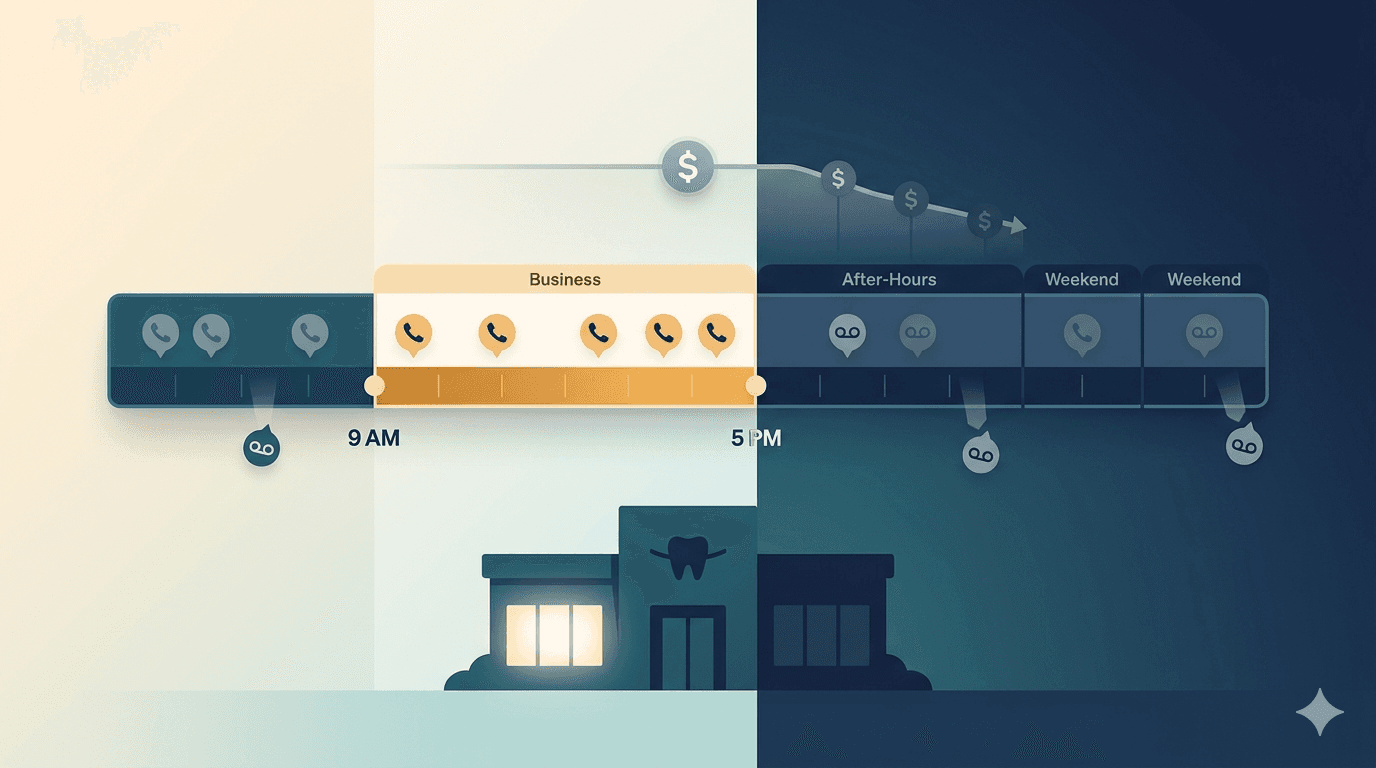
After-Hours Orthodontic Calls: The 5 PM to 9 AM Revenue Gap That Practice Owners Keep Underestimating
Read more